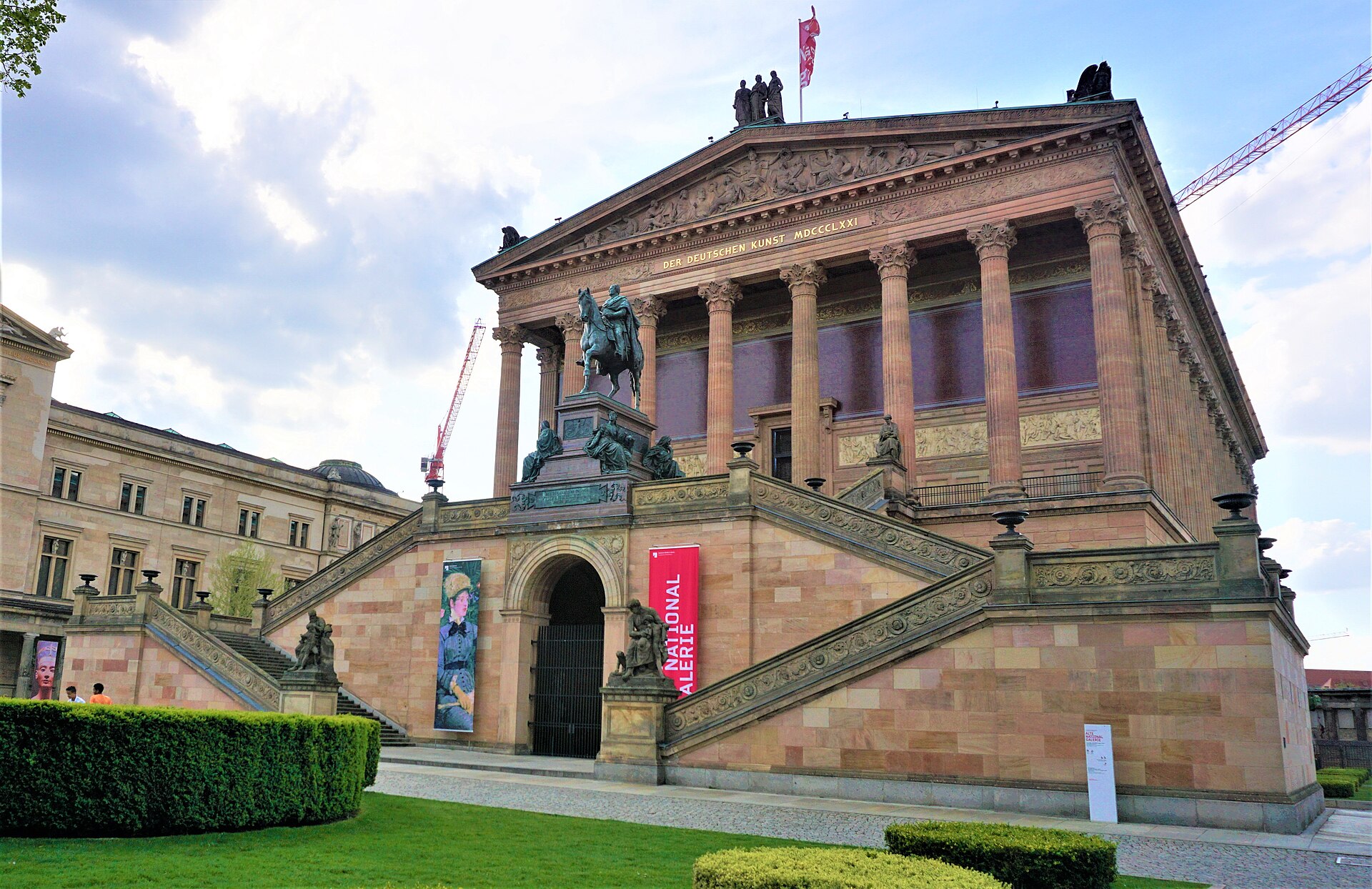
The Alte Nationalgalerie's temple-fronted facade, with the equestrian statue of Friedrich Wilhelm IV on the entrance stair, seen from the Kolonnadenhof.
Photograph by Joyofmuseums, released CC BY-SA 4.0Alte Nationalgalerie
Museum · Founded 1876
Open, admission and hours confirmed 20 August 2026 · 13 sources
On this page 15 sections
ContentsClose
The Alte Nationalgalerie's strength is a coherent run of German painting and sculpture from the French Revolution to the First World War, roughly 1800 paintings and 1500 sculptures, shown inside a building designed specifically to house that century rather than adapted to it later. Its French Impressionist holdings, arriving through private collectors rather than official purchase, sit inside the same rooms as the German Romantic and Realist painting they were once resisted alongside. Few museums anywhere let a visitor walk directly from the Romantic landscape painting that helped define German national identity in the early 19th century, through the industrial Realism that questioned it, into the French Impressionism that German museum directors themselves once fought their own institutions to acquire, all inside a single purpose-built 1876 building that has outlived a confiscation, a bombing campaign and forty-five years of a divided city.
| Kind | Museum |
|---|---|
| Founded | 1876 |
| City and country |  Berlin, Germany Berlin, Germany |
| Address | Bodestrasse, 10178 Berlin, Germany |
| Website | smb.museum/en/museums-institutions/alte-nationalgalerie/home |
| Status | Open, confirmed |
| Record last verified |
Visiting
- Hours
- MonClosed
- Tue10:00 to 18:00Extended to 9:30-19:00 from 14 August through 27 September 2026 for the Cassirer exhibition; standard hours resume after
- Wed10:00 to 18:00Extended to 9:30-19:00 from 14 August through 27 September 2026 for the Cassirer exhibition; standard hours resume after
- Thu10:00 to 18:00Extended to 9:30-19:00 from 14 August through 27 September 2026 for the Cassirer exhibition; standard hours resume after
- Fri10:00 to 18:00Extended to 9:30-19:00 from 14 August through 27 September 2026 for the Cassirer exhibition; standard hours resume after
- Sat10:00 to 18:00Extended to 9:30-19:00 from 14 August through 27 September 2026 for the Cassirer exhibition; standard hours resume after
- Sun10:00 to 18:00Extended to 9:30-19:00 from 14 August through 27 September 2026 for the Cassirer exhibition; standard hours resume after
- Closed
- Monday.
- Admission
- Museum Ticket, Alte Nationalgalerie + Cassirer exhibition, adultEUR 16Combined ticket for the permanent collection and the current Cassirer exhibition
- Museum Ticket, concessionsEUR 8
- Express Ticket, Cassirer exhibition onlyEUR 35No concession rate
- Museum Island day ticket, adultEUR 24Covers Alte Nationalgalerie, Altes Museum, Bode-Museum, Neues Museum and Pergamonmuseum. Das Panorama on one day
- Museum Island day ticket, concessionsEUR 12
- Under 18, school classes, enrolled studentsFreeFree
- Surcharge for Cassirer exhibition, Annual Pass CLASSIC + BASIC, Museum Pass Berlin, WelcomeCard all inclusive, or Museum Island ticket holdersEUR 6Confirmed on the museum's current prices page, 2026-08-20; Annual Pass CLASSIC PLUS and Kombiticket Museumsinsel holders are exempt from this surcharge
- Surcharge for pass holders, concessionsEUR 3Confirmed on the museum's current prices page, 2026-08-20
- Tickets
- tickets.smb.museum The museum's own ticket page.
- Do I need to book?
- Not required; online timed tickets recommended, bookable up to four weeks ahead. Groups of ten or more must book at least two weeks ahead, with a 10 EUR booking fee added to admission
- Address
- Bodestrasse, 10178 Berlin, Germany MapU-Bahn Museumsinsel
S-Bahn Friedrichstrasse, Hackescher Markt
Tram Am Kupfergraben, Hackescher Markt
Bus U Museumsinsel - Website
- smb.museum/en/museums-institutions/alte-nationalgalerie/home
- Telephone
- +49 30 266424242
Before you go how long, access, photography, bags, eating, shop
- How long to allow
- Two to three hours
- Access
- Not detailed in the sources consulted for this page
- Photography
- Not detailed in the sources consulted for this page
- Bags
- Not detailed in the sources consulted for this page
- Eating
- Not detailed in the sources consulted for this page
- Shop
- Museum shop, on site
Prices and hours change. We take them from the institution's own pages and print the day we read them, and you can check the current position at the source we used. Confirm before you travel.
What is inside
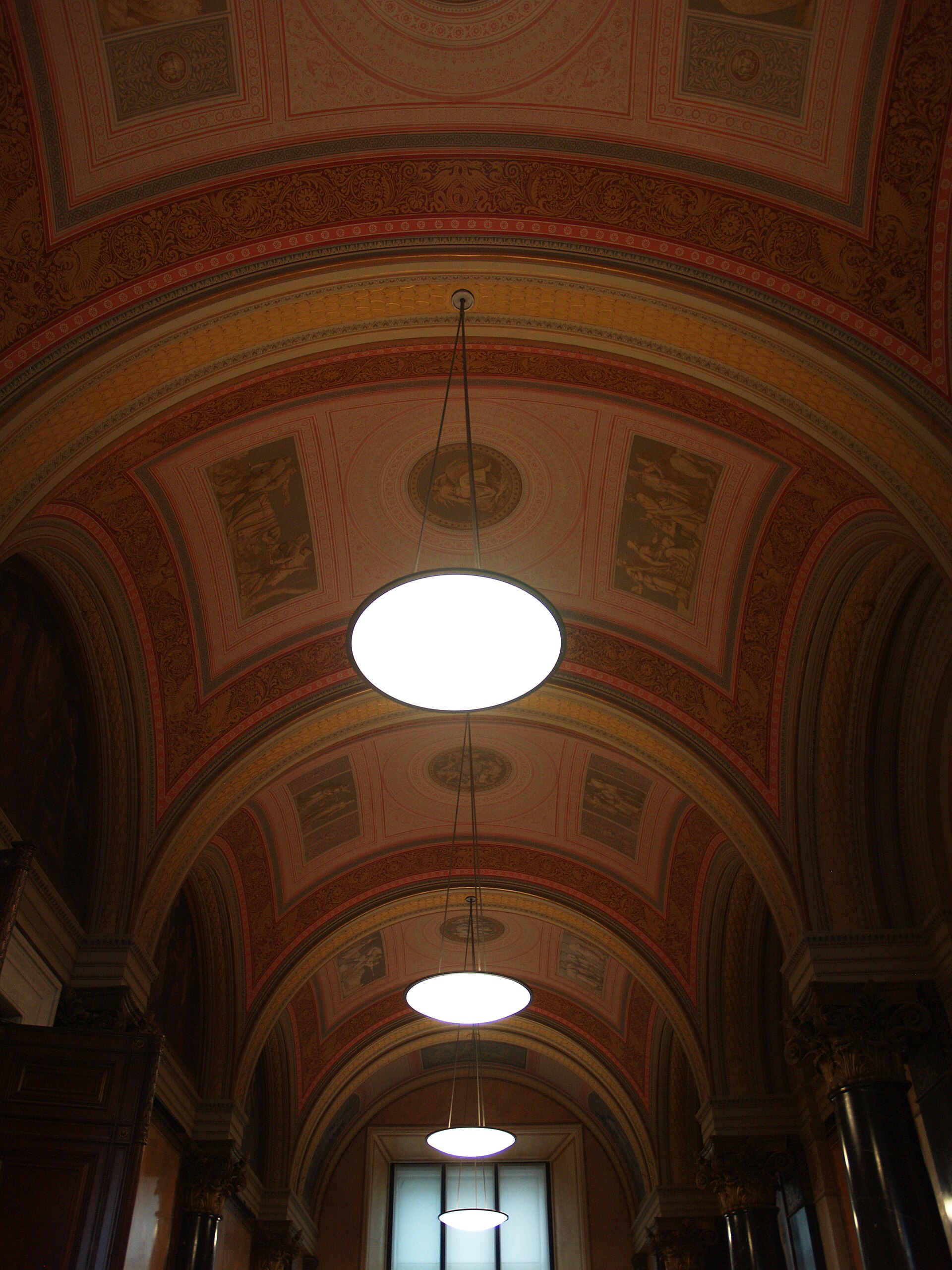
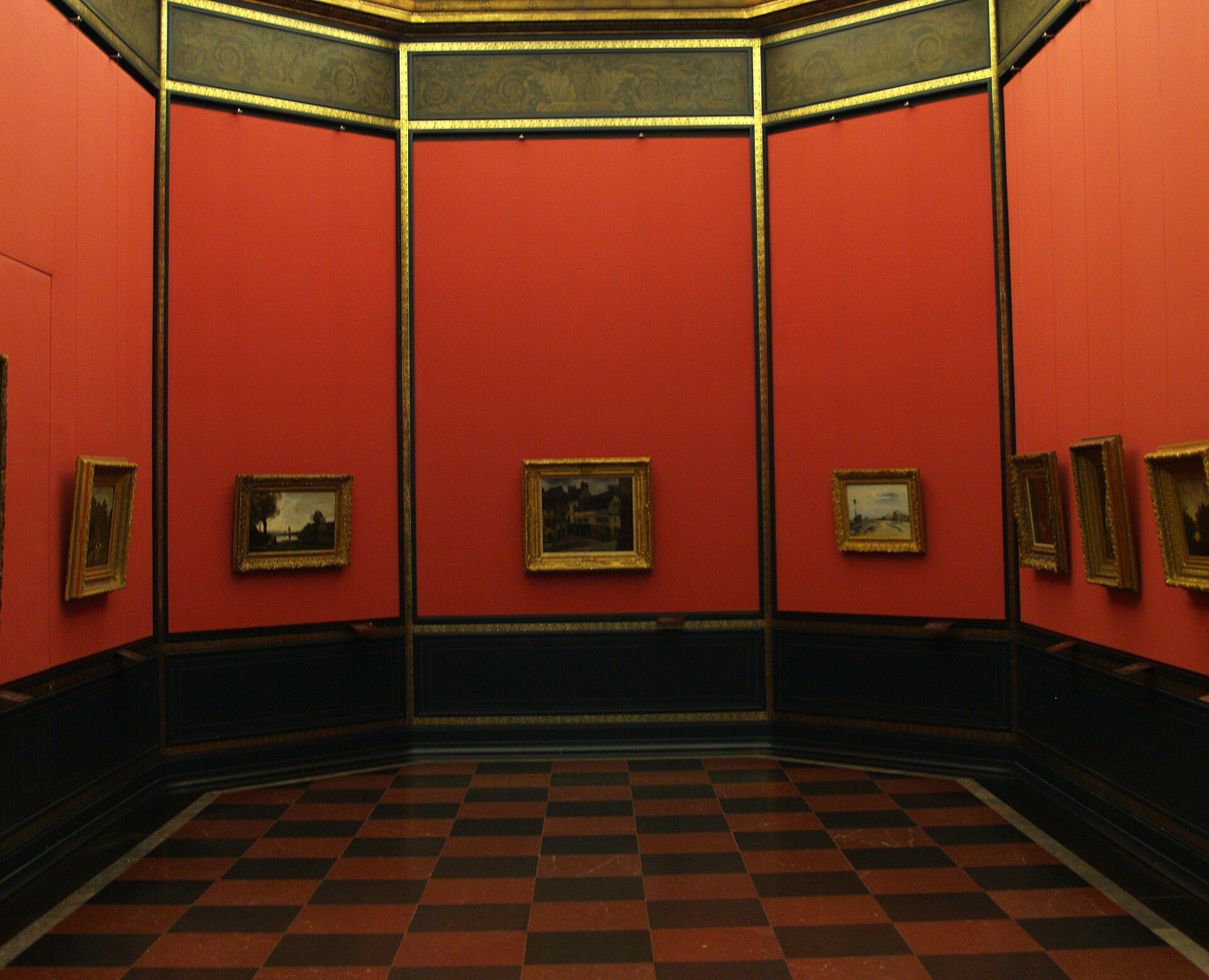
Photograph by MiguelHermoso · CC BY-SA 3.0 Third floor - the Age of Goethe and Romanticism
Painting from the turn of the 19th century through Romanticism: Caspar David Friedrich, Karl Friedrich Schinkel working as a painter rather than an architect, and Carl Blechen. This is where the museum's Friedrich holdings hang, including The Monk by the Sea and Moonrise at the Ocean.
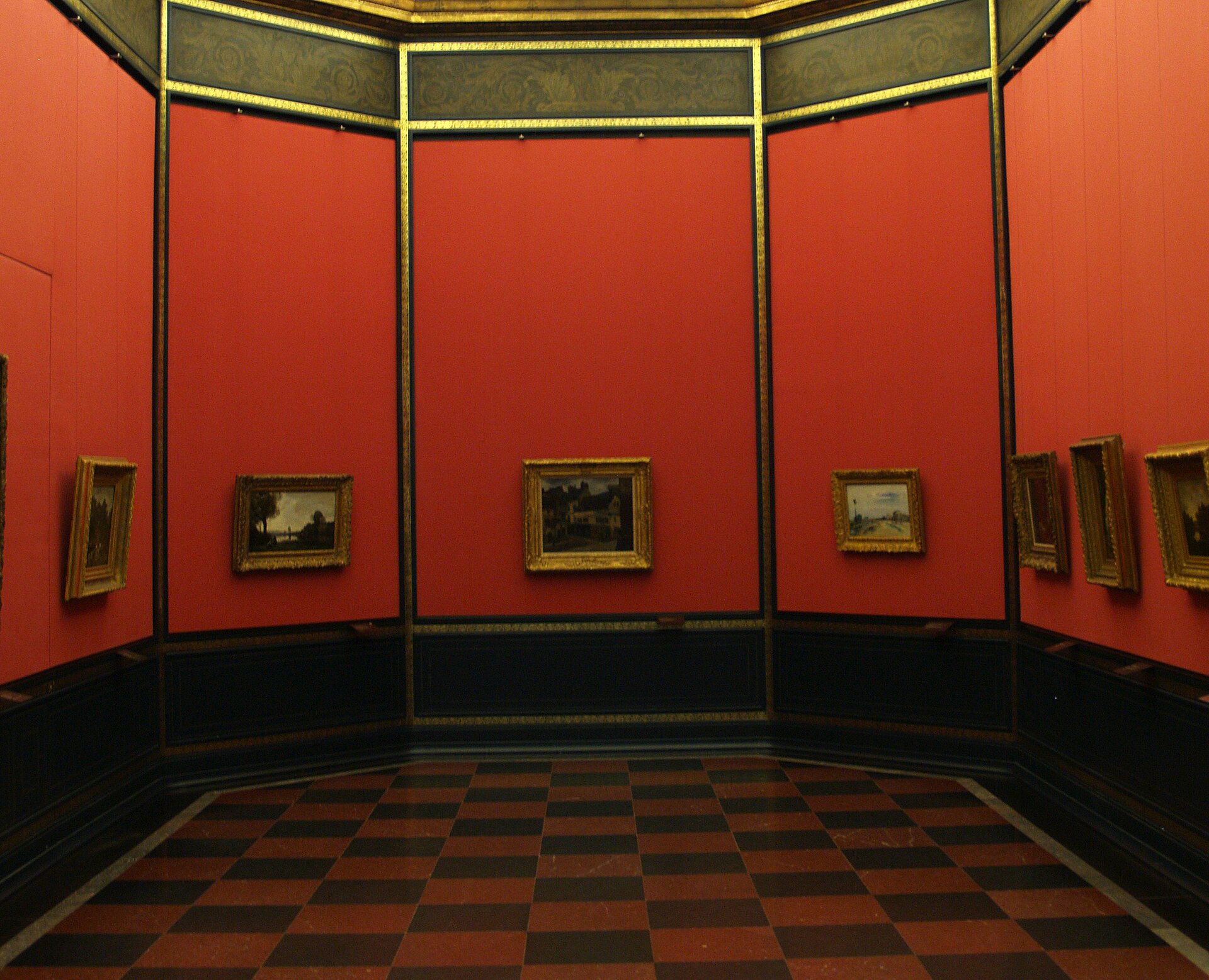
Photograph by MiguelHermoso · CC BY-SA 3.0 Second floor - Impressionism
French and German Impressionism and its immediate circle: Edouard Manet, Claude Monet, Auguste Renoir, Edgar Degas and Paul Cezanne, shown alongside the German artists who collected and championed them in Berlin before German museums more broadly accepted French Impressionism. As of August 2026 this floor also hosts the temporary exhibition Cassirer and the Breakthrough of Impressionism, on view 22 May to 27 September 2026; the museum's own site states the permanent Impressionist display on this floor is not fully open while the special exhibition runs and returns to full access from 22 October 2026, with extended visiting hours (9:30 am to 7 pm, Tuesday to Sunday) in effect from 14 August 2026 for the duration.
First floor - the transverse sculpture hall
Neoclassical and 19th-century sculpture displayed across the width of the building, including Johann Gottfried Schadow's Princesses Luise and Friederike, and works by Bertel Thorvaldsen and Antonio Canova.
First floor - Realism and Adolph Menzel
German Realism, centred on Adolph Menzel, whose Iron Rolling Mill and The Balcony Room are both here, alongside the museum's Casa Bartholdy fresco cycle, transferred from a Rome villa where a group of German painters worked in the 1810s.
What to see first
Princesses Luise and Friederike
Johann Gottfried SchadowA double portrait statue of the Prussian princesses, arm in arm, considered Schadow's masterpiece and one of the most recognisable works of German Neoclassical sculpture; it anchors the museum's transverse sculpture hall.5
The Monk by the Sea
Caspar David FriedrichA near-abstract composition of a single small figure dwarfed by an empty sea and an even emptier sky, with almost nothing else in the frame; one of the paintings most credited with establishing German Romantic landscape painting as a serious subject in its own right rather than as a picturesque backdrop.6
The Iron Rolling Mill
Adolph MenzelA large, unsentimental painting of workers in a steel mill, among the first major German paintings to take industrial labour itself as its subject rather than as a distant backdrop.5
The Balcony Room
Adolph MenzelA small, almost empty interior with billowing curtains and no figures, painted decades before it would have been called modern; frequently cited as anticipating later abstraction by an artist otherwise associated with meticulous historical realism.5
Isle of the Dead (version)
Arnold BoecklinOne of several versions Boecklin painted of the same haunting composition of a boat approaching a walled island of cypress trees, a 19th-century image so widely reproduced it shaped later Symbolist and Surrealist imagery.5
Casa Bartholdy frescoes
Peter von Cornelius and the Nazarene circleFresco cycle removed from a Rome villa where a group of early 19th-century German painters, the Nazarenes, lived and worked communally; a rare survival of a fresco cycle intended for private rooms rather than a church.5
Exhibitions on now
- On now22 Mar to 15 Nov 2026Confirmed , 6 weeks ago
- On now18 Jun 2026 to 17 Jan 2027Confirmed , 6 weeks ago
- Opening soon22 Oct 2026 to 28 Feb 2027Confirmed , 6 weeks ago
Past exhibitions here
- Closed22 May to 27 Sep 2026Confirmed · check before you travel
A gift that became a building
The Alte Nationalgalerie exists because of a single bequest. In 1861 the banker and consul Johann Heinrich Wilhelm Wagener left the Prussian state 262 paintings, weighted toward Belgian history painting and the Duesseldorf school, on condition that they be kept together and shown to the public. The state commissioned Friedrich August Stueler, a student of Karl Friedrich Schinkel who had already designed the Neues Museum next door, to build a gallery to hold them; Stueler died before construction finished, and another of Schinkel's students, Johann Heinrich Strack, completed it. After ten years of building work the Nationalgalerie opened ceremonially on 21 March 1876, timed to Kaiser Wilhelm I's birthday, the third museum to open on the island in the Spree. By the opening the collection had already grown well beyond Wagener's original gift.
What the Nazi period took from its own walls
The Nationalgalerie's hardest history is not what it lost to war but what the German state took from it deliberately, while it was still standing and still open. Under its director Ludwig Justi, the museum had built one of the first serious public collections of contemporary art anywhere, a Gallery of the Living that put recent German Expressionist and modern work on public walls years before most European museums would. In 1937 the Nazi state confiscated this achievement wholesale: a state commission stripped the Nationalgalerie of more than 500 works as part of the nationwide campaign against what the regime called degenerate art, one piece of a confiscation that eventually removed more than 20,000 works by some 1,400 modern artists from German public collections in a matter of days. Some of what was taken from the Nationalgalerie was sold abroad by the regime to raise foreign currency, some was destroyed, and some survives today in other collections entirely. The Stiftung Preussischer Kulturbesitz, which now governs the Staatliche Museen zu Berlin, has stated publicly that it is still documenting the scale of the loss and investigating what role the museum's own staff played in choosing which works were handed over.
Bomb damage, evacuation, and what came back
The building itself was hit repeatedly during the Allied bombing of Berlin, sustaining heavy damage especially from 1944 onward, and by the war's final months the collection had already been moved out for safekeeping: to anti-aircraft towers near the Berlin Zoo and in Friedrichshain, and to salt and potash mines at Merkers and Grasleben, far from the city. That evacuation is precisely what the Gemaeldegalerie, the Nationalgalerie's sister institution now at the Kulturforum, did not manage to complete in time for around 430 of its own large-format paintings, which were left behind in the Friedrichshain tower and destroyed there in two fires after the war's end; the sources consulted for this page find no equivalent large-scale loss recorded for the Nationalgalerie's own paintings specifically, though the building both institutions shared as a wartime refuge is the same one.
Impressionism, and the collectors who fought for it
The museum's second floor tells a different, later story: how French Impressionism entered German public collections at all. Manet, Monet, Renoir, Degas and Cezanne hang there today, works that in most cases arrived in Berlin through private collectors and dealers, prominently the Cassirer family, who championed French modern art in Germany well before German museum directors were willing to buy it with state money. Hugo von Tschudi, one of the Nationalgalerie's own directors, pushed to acquire Impressionist and Post-Impressionist works against fierce official resistance in the early 1900s, a fight that cost him his position. The current Alte Nationalgalerie exhibition on the Cassirer family and its influence, running through the collection during 2026, revisits exactly this history rather than treating it as settled background.
Realism next to it, unresolved
On the floor below, Adolph Menzel occupies a similar hinge position in the museum's own account of itself: a court painter capable of exacting historical illustration who also produced, in the same decades, The Iron Rolling Mill, one of German painting's first unflinching treatments of industrial labour, and The Balcony Room, an almost empty interior that reads more like a 20th-century painting than a 19th-century one. The museum keeps both readings of Menzel on view rather than choosing one, in the same building where a Nazi-era commission once decided, on the state's behalf, which kinds of German painting were acceptable to show at all.
What visitors say
Visitors consistently rank the Alte Nationalgalerie among Berlin's strongest art museums, and praise the building and its Museum Island setting as much as the collection. The 19th-century German paintings and the Impressionist rooms draw the most comment; the special-exhibition closures on the second floor are the most common source of visitor frustration when they coincide with a visit.
What is praised, what is criticised
- Praised: the building itself and its position on Museum Island, frequently singled out as much as any painting inside
- Praised: the depth of the German Romantic and Realist collection, especially Caspar David Friedrich and Menzel
- Praised: the French and German Impressionist rooms
- Criticised: partial closures of the permanent collection during temporary exhibitions, which visitors report finding out about only after arriving
- Criticised: some visitors find the collection modest in scale next to the Gemaeldegalerie or the Pergamonmuseum, for a full day's museum plan
Ratings on other platforms
Tripadvisor: 4.2 from 988 ratings, read 7 August 2026
A platform average is a tertiary source: it moves, it is not audited, and we quote no visitor's words.
Questions about Alte Nationalgalerie
Where is Alte Nationalgalerie?
Bodestrasse, 10178 Berlin, Germany.
How much does it cost to visit?
Museum Ticket, Alte Nationalgalerie + Cassirer exhibition, adult: EUR 16; Museum Ticket, concessions: EUR 8; Express Ticket, Cassirer exhibition only: EUR 35; Museum Island day ticket, adult: EUR 24; Museum Island day ticket, concessions: EUR 12. As confirmed 20 August 2026.
When is it open?
Mon closed; Tue 10:00-18:00; Wed 10:00-18:00; Thu 10:00-18:00; Fri 10:00-18:00; Sat 10:00-18:00; Sun 10:00-18:00. Closed: Monday. As confirmed 20 August 2026.
How do you get there?
U-Bahn: Museumsinsel; S-Bahn: Friedrichstrasse, Hackescher Markt; Tram: Am Kupfergraben, Hackescher Markt; Bus: U Museumsinsel.
What should you see first?
Princesses Luise and Friederike (Johann Gottfried Schadow); The Monk by the Sea (Caspar David Friedrich); The Iron Rolling Mill (Adolph Menzel); The Balcony Room (Adolph Menzel); Isle of the Dead (version) (Arnold Boecklin); Casa Bartholdy frescoes (Peter von Cornelius and the Nazarene circle).
What we could not confirm
- The full inventory of the roughly 500-plus works confiscated from the Nationalgalerie in 1937 as degenerate art, and the eventual fate of each piece - sold abroad, destroyed, or surviving in another collection - is described by the museum's own governing foundation as still being documented rather than closed.
- Whether any of the Nationalgalerie's own paintings, as distinct from the Gemaeldegalerie's, were among the works lost in the Friedrichshain flak tower fires of May 1945 was not established by the sources consulted for this page.
Images
Sources
- 1Staatliche Museen zu Berlin, Alte Nationalgalerie, Plan Your Visit - Opening Hours smb.museum/en/museums-institutions/alte-nationalgalerie/plan-your-visit/opening-hours/
- 2Staatliche Museen zu Berlin, Alte Nationalgalerie, Tickets & Admission smb.museum/en/museums-institutions/alte-nationalgalerie/plan-your-visit/prices-tickets/
- 3Staatliche Museen zu Berlin, Alte Nationalgalerie, Contact smb.museum/en/museums-institutions/alte-nationalgalerie/plan-your-visit/contact/
- 4Staatliche Museen zu Berlin, Alte Nationalgalerie, Address smb.museum/en/museums-institutions/alte-nationalgalerie/plan-your-visit/address/
- 5Staatliche Museen zu Berlin, Alte Nationalgalerie, Collection smb.museum/en/museums-institutions/alte-nationalgalerie/collection-research/collection/
- 6Wikipedia, Alte Nationalgalerie (named works: The Monk by the Sea, Moonrise at the Ocean, the Iron Rolling Mill, the Princesses group) en.wikipedia.org/wiki/Alte_Nationalgalerie
- 7Staatliche Museen zu Berlin, Alte Nationalgalerie, Profile smb.museum/en/museums-institutions/alte-nationalgalerie/about-us/profile/
- 8Stiftung Preussischer Kulturbesitz, We Do Not Forget (the Nationalgalerie and the 1937 degenerate art confiscation) preussischer-kulturbesitz.de/en/news-detail/article/2017/07/19/we-do-not-forget.html
- 9Staatliche Museen zu Berlin, Gemaeldegalerie, Lost Masterpieces (the Friedrichshain flak tower fires of May 1945) smb.museum/en/museums-institutions/gemaeldegalerie/collection-research/research/lost-masterpieces/
- 10Staatliche Museen zu Berlin, Museumsinsel Berlin, Plan Your Visit (Museum Island day ticket) smb.museum/en/museums-institutions/museumsinsel-berlin/plan-your-visit/
- 11Wikidata, Alte Nationalgalerie (Q162111) wikidata.org/wiki/Q162111
- 12Tripadvisor, Alte Nationalgalerie, Berlin, overall rating and review count, read 7 August 2026 tripadvisor.com/Attraction_Review-g187323-d242749-Reviews-Alte_Nationalgalerie-Berlin.html
- 13Staatliche Museen zu Berlin, Alte Nationalgalerie, Home (extended opening hours notice and current exhibitions, read 20 August 2026) smb.museum/en/museums-institutions/alte-nationalgalerie/home/