Al Ain National Museum
Museum · Founded 1969
Open, admission and hours confirmed 23 September 2026 · 15 sources
On this page 14 sections
ContentsClose
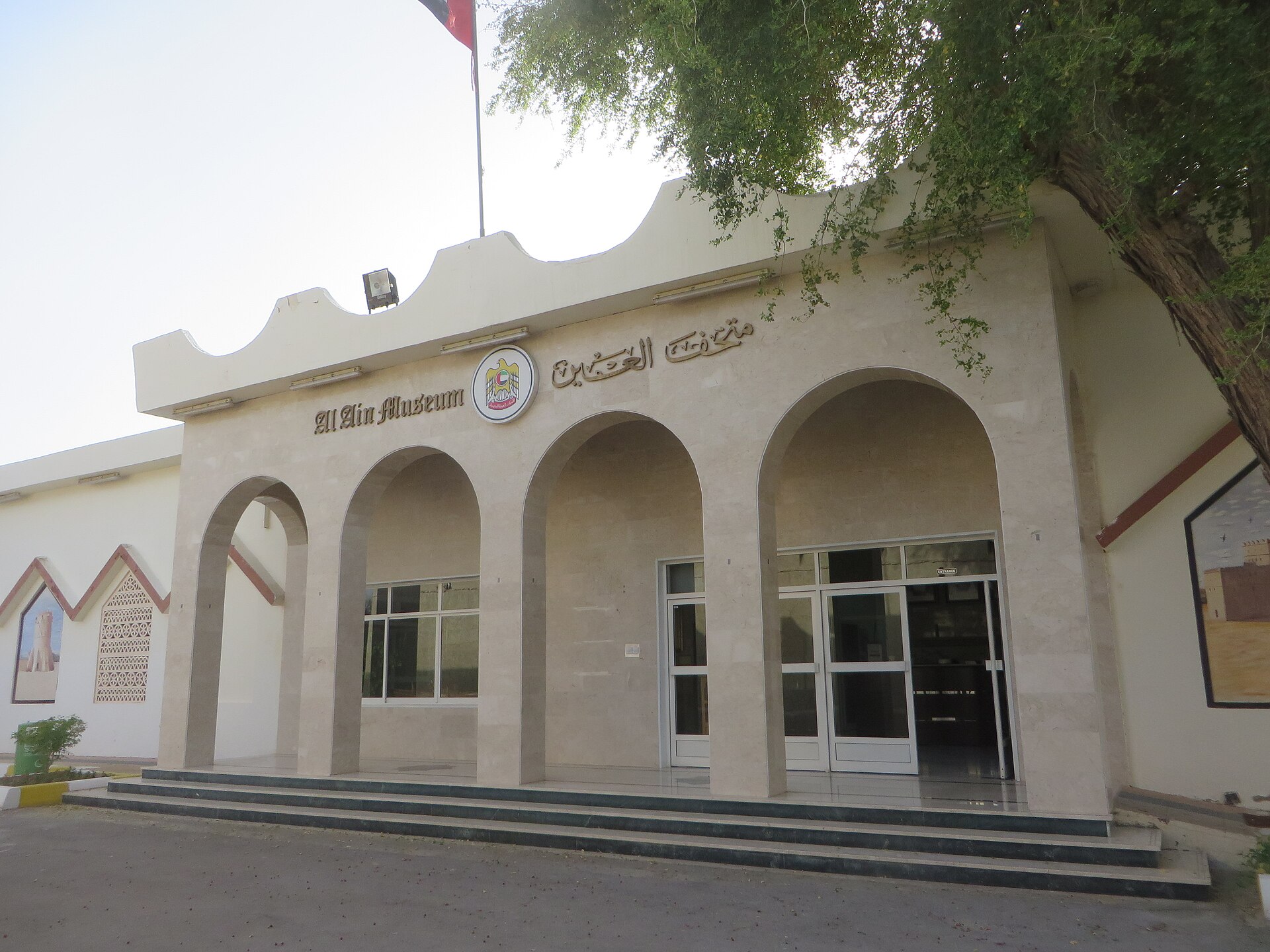
The collection's real strength is continuity of place rather than range: almost everything shown, from 300,000-year-old stone tools to a 1976 diplomatic gift, was found or received within a few kilometres of where it is now displayed, and the 2018-2025 rebuild deliberately left three excavated sites, including a pre-Islamic tomb, in the ground where they were found rather than lifting them into cases. That makes the museum less a survey collection and more a single, continuously inhabited site's own record of itself, running from the Paleolithic through the Bronze and Iron Ages to the diplomacy of the newly founded UAE.
| Kind | Museum |
|---|---|
| Founded | 1969 |
| City and country |  Al Ain, United Arab Emirates Al Ain, United Arab Emirates |
| Address | 46 Al Mut-haf St, Al Ain, United Arab Emirates |
| Website | alainmuseum.ae/en |
| Status | Open, confirmed 23 September 2026 |
| Record last verified | 23 September 2026 |
Visiting
- Hours
- Daily, including weekends09:00 to 19:00Galleries and temporary exhibition; last entry 18:45
- Daily, including weekends09:00 to 19:00The cafe
- Admission
- Adult (18+)AED 47.25General admission, booked through the museum's own ticketing platform
- Under 18FreeFree
- Resident senior citizens (60+)FreeFree; Emirates ID checked on site
- People of determination, plus one companionFreeFree; ID checked on site
- UAE military, Homat Al Watan, UAE teachersAED 23.62Roughly half the adult rate; ID checked on site
- Government entity staffAED 35.44ID checked on site
- Mazaya / Fazaa / Esaad card holdersAED 33.08Card checked on site; several other UAE loyalty and benefit cards carry the same discounted rate on the museum's own ticketing platform
- Tickets
- tickets.alainmuseum.ae/?lang=en The museum's own ticket page.
- Do I need to book?
- No. Tickets can be booked in advance through the museum's own site, and walk-in visits are welcome subject to capacity
- Address
- 46 Al Mut-haf St, Al Ain, United Arab Emirates MapCar On-site parking with a dedicated drop-off zone, off Al Mut-haf Street on the eastern edge of Al Ain Oasis, close to Al Jahili Fort
Taxi The museum's own visit page lists taxi as a route in but gives no fixed fare or stand
Bus The museum's own visit page lists bus as a route in but names no specific line - Website
- alainmuseum.ae/en
- Telephone
- +971 3 711 8383
- [email protected]
Before you go how long, access, photography, bags, eating, shop
- How long to allow
- About one to two hours; visitors who linger over the diplomatic-gifts and Tower Tomb galleries have reported closer to two
- Access
- The museum states it is fully accessible to people of determination, with adapted pathways, facilities and a dedicated drop-off zone
- Photography
- Not stated on the museum's own site as fetched; not recorded here rather than guessed
- Bags
- Not stated on the museum's own site as fetched; not recorded here rather than guessed
- Eating
- An on-site cafe, open the same daily hours as the galleries
- Shop
- An on-site gift shop / retail space is confirmed by the museum's own site and by Time Out Abu Dhabi's coverage of the reopening
Prices and hours change. We take them from the institution's own pages and print the day we read them, and you can check the current position at the source we used. Confirm before you travel.
What is inside
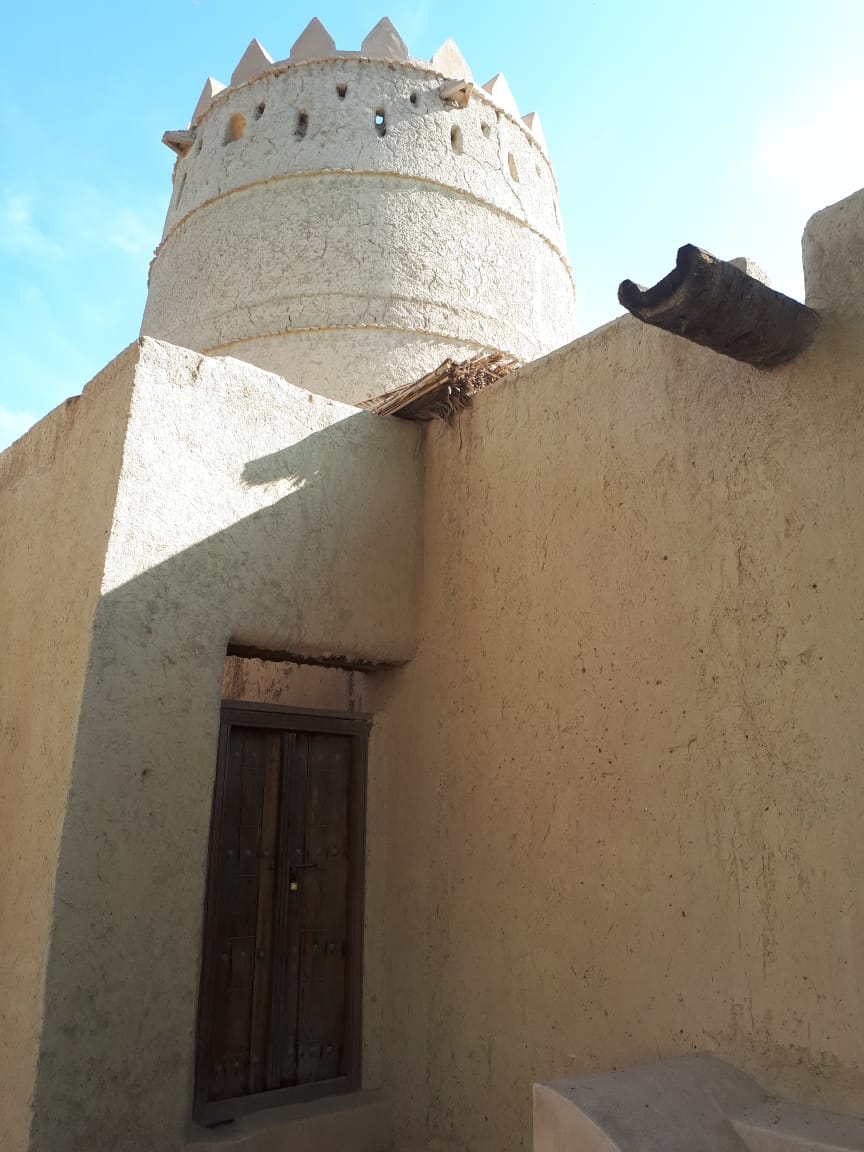
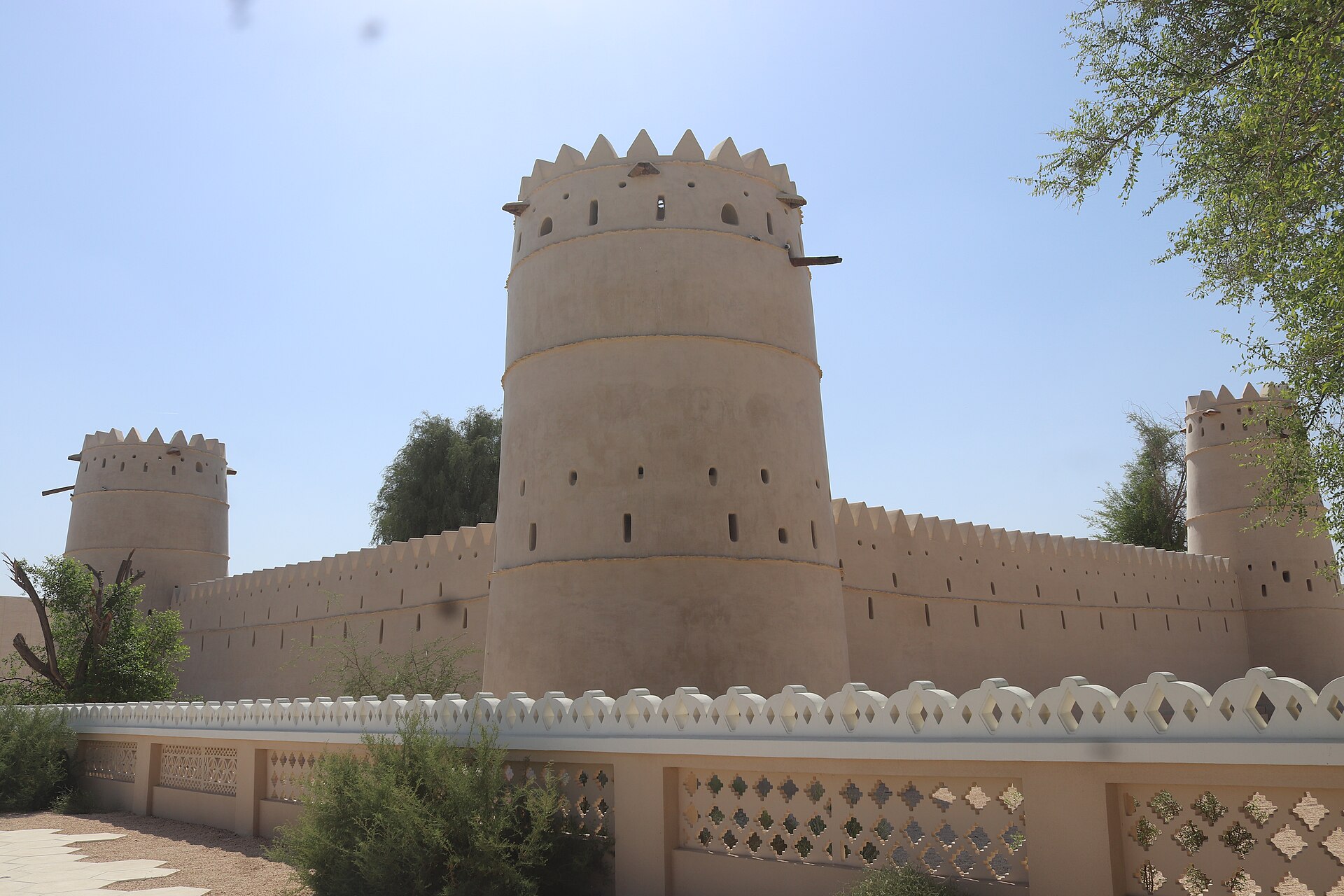
Photograph by Ayesha Moiz Khan · CC BY-SA 4.0 Sultan Fort (Eastern Fort)
A mudbrick fort with towers at three corners and a gate in its southern facade, built in 1910 by Sheikh Sultan bin Zayed Al Nahyan, ruler of Abu Dhabi 1922-26. It is where the museum's first temporary exhibition was shown in 1969-70 while the purpose-built halls were under construction, and it was revitalised as part of the 2018-2025 redevelopment. It sits at the historic heart of the Harat Al Hosn quarter, which took its name from the fort.
The restored 1970s museum building
The original purpose-built museum structure from the 1970s, now conserved and treated by the museum itself as a piece of modern heritage in its own right, standing alongside the fort and the new galleries rather than being replaced by them.
Paleolithic and Neolithic-to-Iron-Age galleries
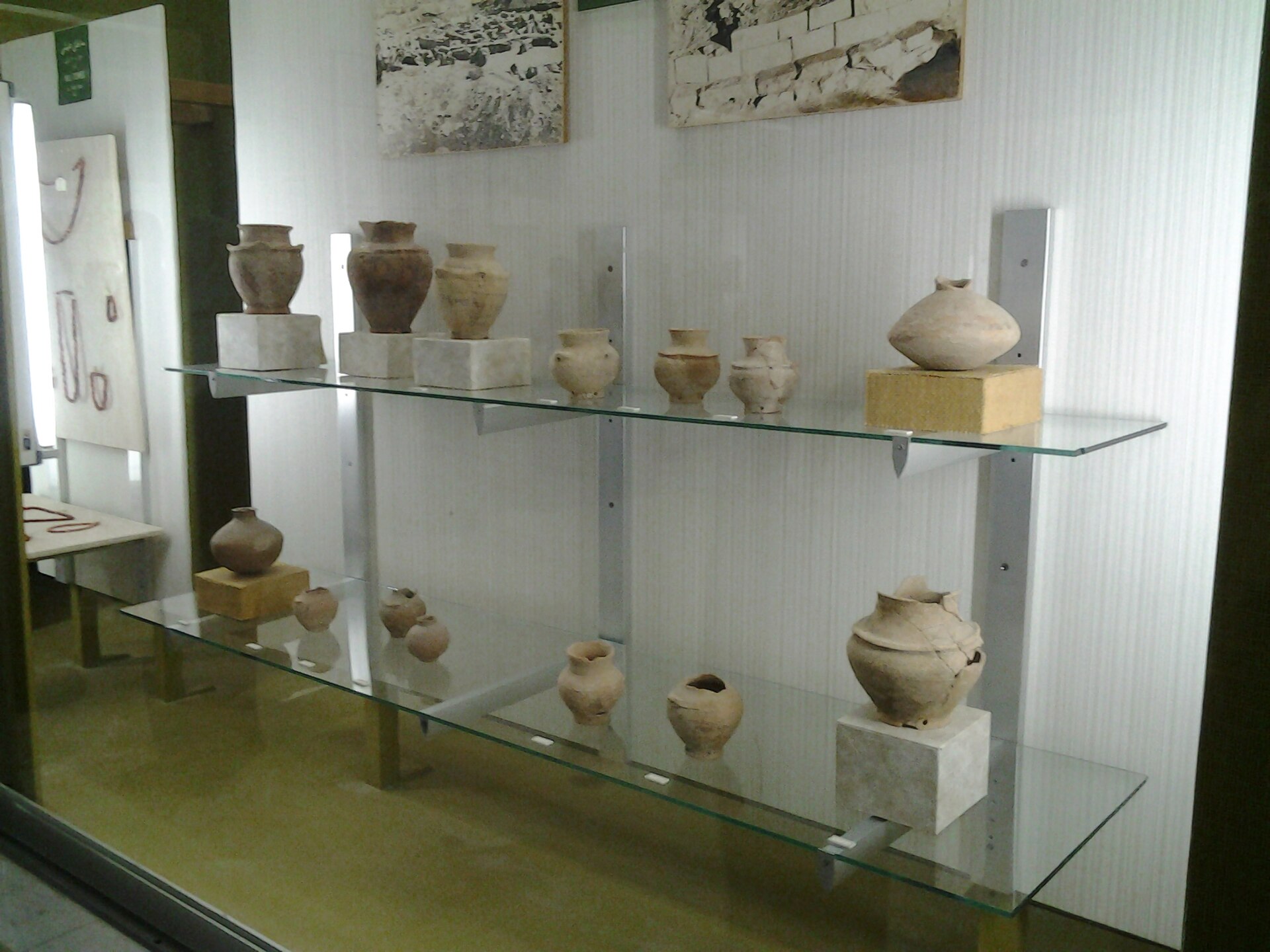
Stone tools from Jebel Hafeet and Jebel Munda documenting human activity in the region from roughly 300,000 years ago, followed by evidence of early agriculture, metallurgy and settled community life through the Neolithic and into the Iron Age (about 8000-300 BCE).
The Tower Tomb gallery
Built around an in-situ pre-Islamic tomb more than 2,000 years old, uncovered during the 2018-2025 restoration and expansion works and preserved exactly where it was found; the museum says it is the only tomb of its kind and period discovered here. The gallery's form is designed to echo the shape of the tomb itself. Finds from the tomb and a simpler grave nearby include a small worked-gold piece, a gypsum object that helped identify the tomb's nature, and crescent-shaped earrings.
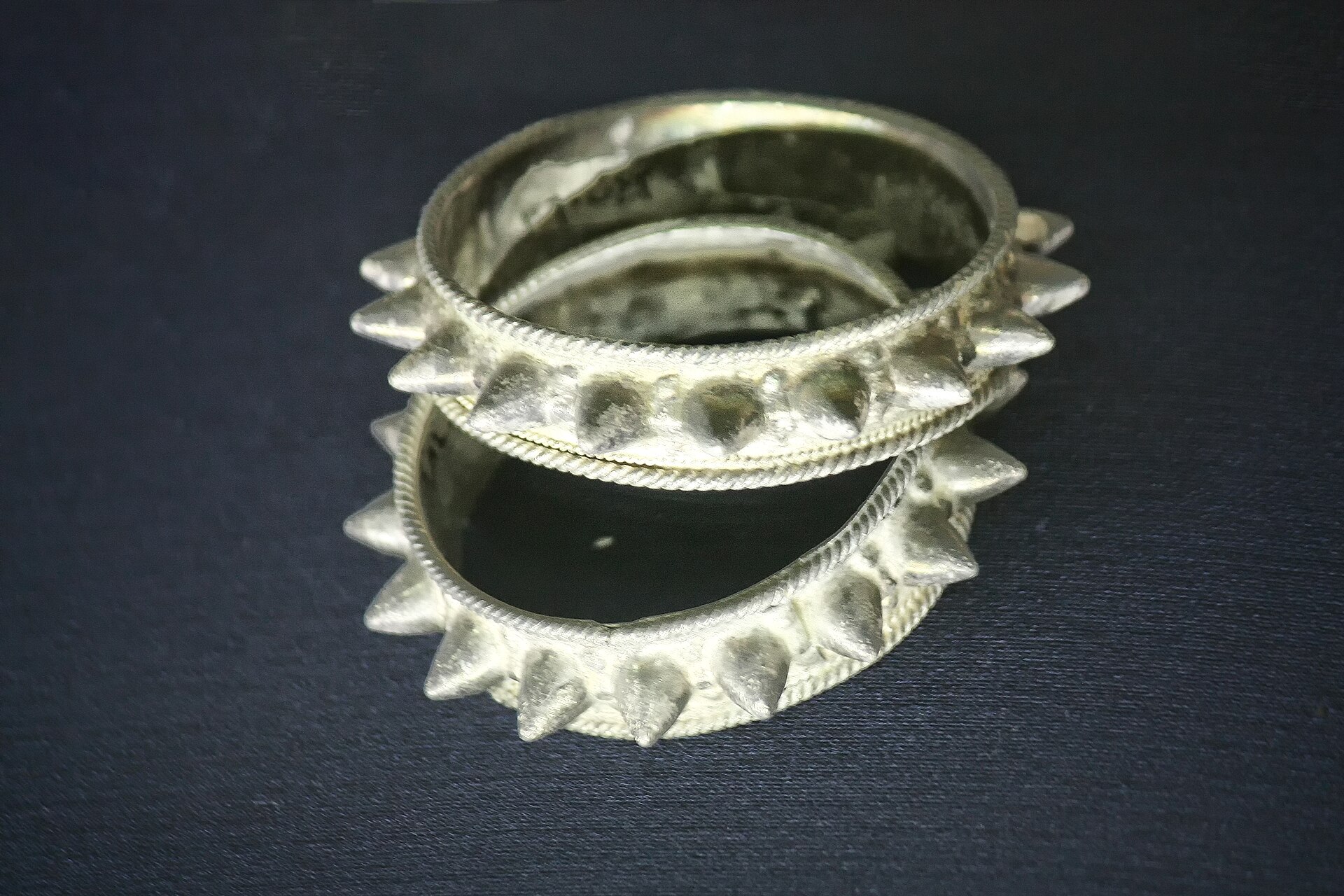
Photograph by Iwona Rege · CC BY-SA 4.0 Wadi Suq and jewellery gallery
Bronze Age material from the Wadi Suq period (roughly 3,625-4,025 years ago), when large above-ground tombs such as the Hili Grand Tomb gave way to smaller underground tombs like the Qattara Tomb. The museum's gold, electrum and silver jewellery is shown here, including a gold necklace depicting two hornless horned animals, thought to be goats or ibexes though their identity is not settled.
Aflaj and Wells galleries
Two linked galleries tracing the region's falaj irrigation systems, from early water management around 1000 BCE-300 CE through to their long-term evolution up to about 1950, and the oasis life the aflaj made possible.
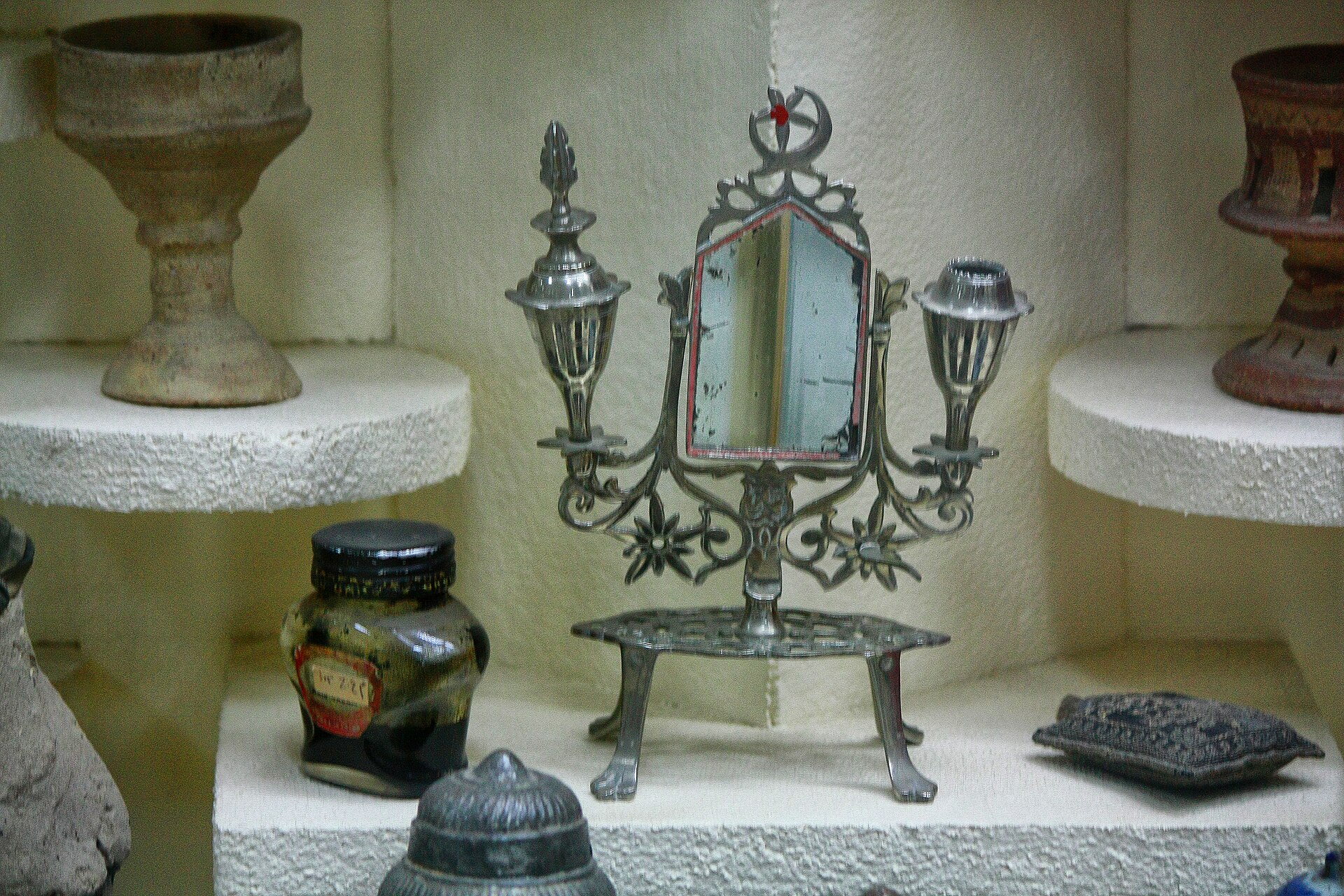
Photograph by Iwona Rege · CC BY-SA 4.0 Pre-Islamic to late Islamic period gallery
Coins and trade material spanning roughly 300 BCE to 1960, including a Maria Theresa thaler minted in 1741 that stayed in circulation regionally for trade and jewellery until the UAE dirham replaced it in 1973, alongside material evidencing contact with the Indus Valley world.
Visible Storage
A display of stored archaeological objects presented alongside an explanation of the museum's own conservation practice, rather than behind a closed door.
What to see first
The Tower Tomb, in its original ground
Unknown, pre-Islamic, more than 2,000 years oldFound during the museum's own 2018-2025 rebuild and left exactly where it lay, it is the only tomb of its kind and period recorded at the site; the gallery around it was shaped to echo the tomb's own form rather than the other way round.12
Wooden model of the Dome of the Rock
Unrecorded maker; presented by Prince Hassan bin Talal of JordanA carved model inlaid with coloured mother-of-pearl, given to Sheikh Zayed in 1976 during a state visit and later placed in the museum; one of the clearest single objects tying the collection to the young UAE's early diplomacy.12
Silver plate bearing Gamal Abdel Nasser's signature
Gift of the Grand Imam of Al-Azhar, EgyptA diplomatic gift carrying the signature of the former Egyptian president, part of a small group of state gifts the museum displays as evidence of Sheikh Zayed's foreign relationships rather than as art objects in their own right.12
Gold necklace with two hornless animals, Qattara Tomb
Unknown, Wadi Suq period, roughly 3,625-4,025 years oldScholars read the paired animals as goats or ibexes but have not settled the identification; a Bronze Age piece from the shift to smaller underground Wadi Suq tombs after the large above-ground Umm an-Nar tombs such as Hili Grand Tomb.12
Maria Theresa thaler
Minted 1741, Habsburg Austria, under Empress Maria TheresaA European trade coin that stayed in circulation in the region on the strength of its silver content long after the empress's death, used locally until the UAE dirham replaced it in 1973; a single coin that carries two centuries of regional trade history.12
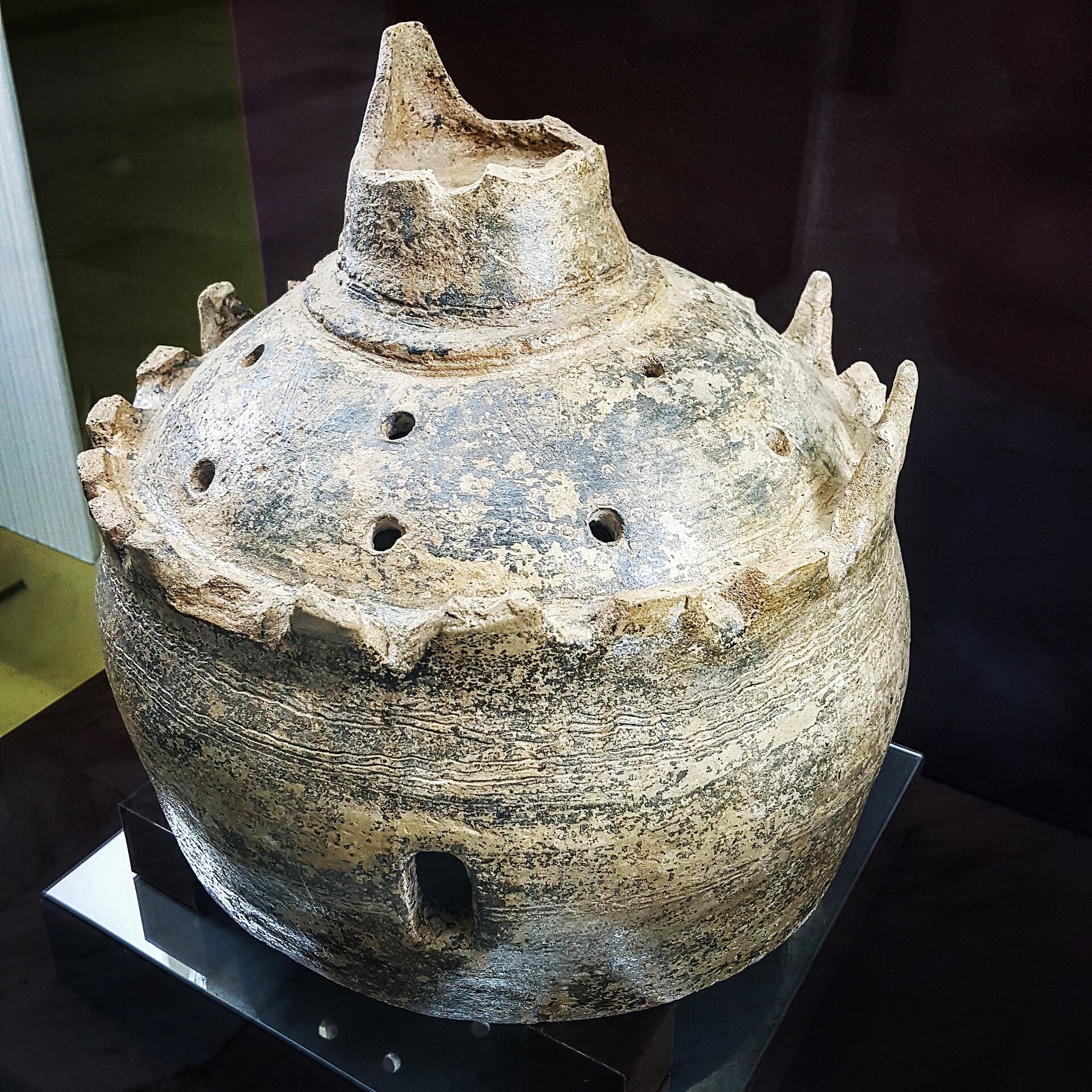
Black-painted ceramic vessel, Hili tombs
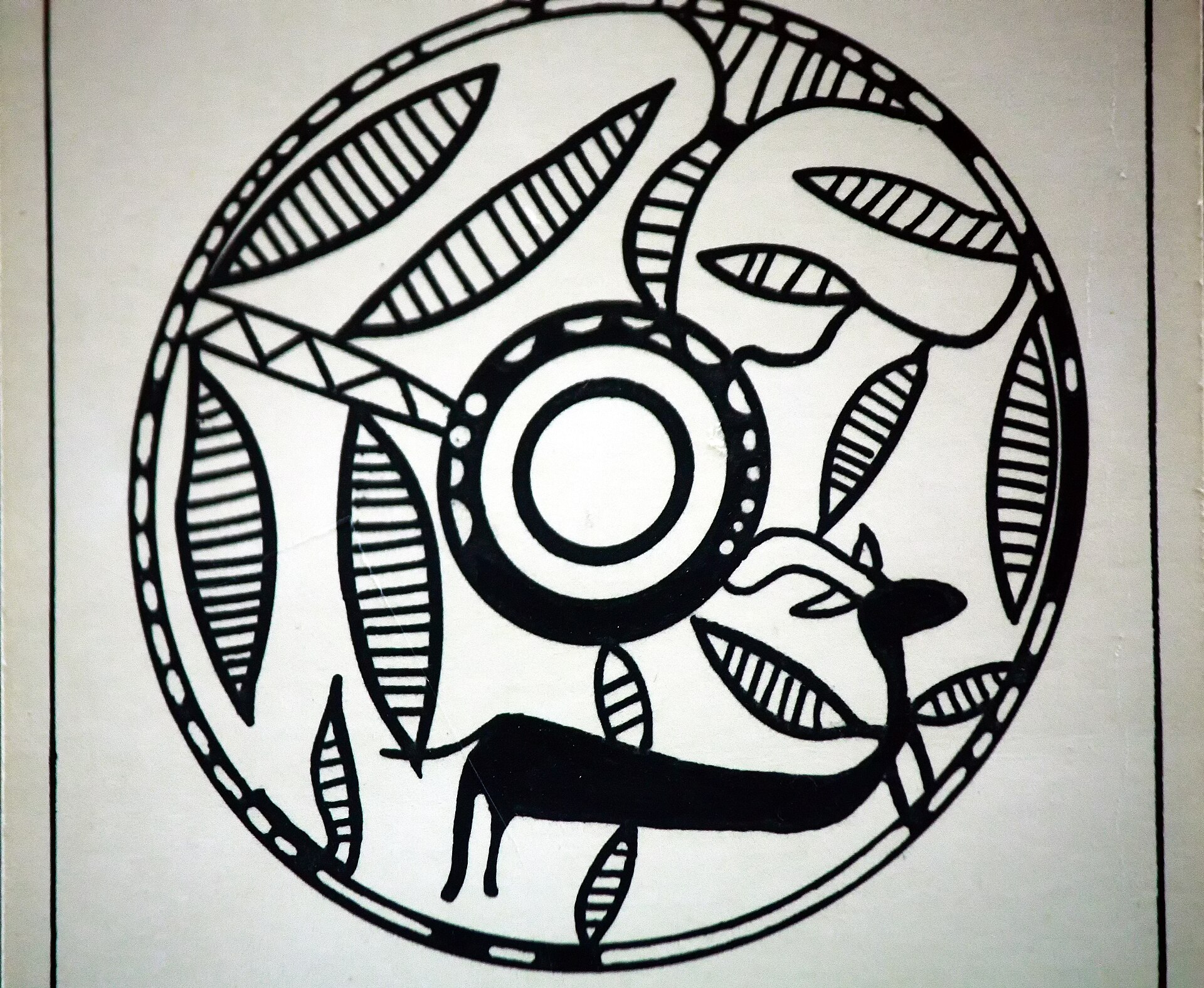
Unknown, Iron AgeDecorated with leaves and mountain goats and used to store water and food, recovered from the Hili tombs; cited by the museum's own reopening coverage as evidence of both funerary practice and everyday life in the same period.12
Paleolithic stone tools, Jebel Hafeet and Jebel Munda
Unknown, up to roughly 300,000 years oldAmong the oldest material the museum shows, evidence of small nomadic groups using the two mountains as a source of water, plants and game long before settled life in the oasis.12
Gold, electrum and silver jewellery collection
Various, regionalNamed by the museum's own official portal as a centrepiece of the collection, each piece presented as evidence of craftsmanship and trade rather than only ornament.7
A fort, a founding king, and a museum built around both
Al Ain Museum was founded in 1969 on the direction of Sheikh Zayed bin Sultan Al Nahyan, who would become the founding president of the United Arab Emirates two years later. While the museum's purpose-built halls were under construction, its first exhibition was shown inside Sultan Fort, also called the Eastern Fort, a mudbrick fort with corner towers built in 1910 by Sheikh Sultan bin Zayed Al Nahyan, who ruled Abu Dhabi from 1922 to 1926. The fort stood at the heart of Harat Al Hosn, the residential quarter that once surrounded it on the eastern edge of Al Ain Oasis, and took the quarter's alternative name, Haret Al Hosn, from it.
The museum itself was formally inaugurated on 2 November 1971 by Sheikh Tahnoun bin Mohammed Al Nahyan, the Ruler's Representative in the Eastern Region, making it the first purpose-built museum in the UAE and the oldest museum in the country still operating under its founding name. It opened with two exhibition halls. Excavation campaigns between 1973 and 1977 turned up enough new material that Sheikh Zayed had the museum expanded to four halls. The institution's place in national memory was marked formally twice: with a 50-dirham coin issued in 2001 for the museum's 30th anniversary, showing Sheikh Zayed on one face and an engraving from the Hili Grand Tomb on the other, and with commemorative postage stamps in 2003.
Closed in 2018, and what the closure found
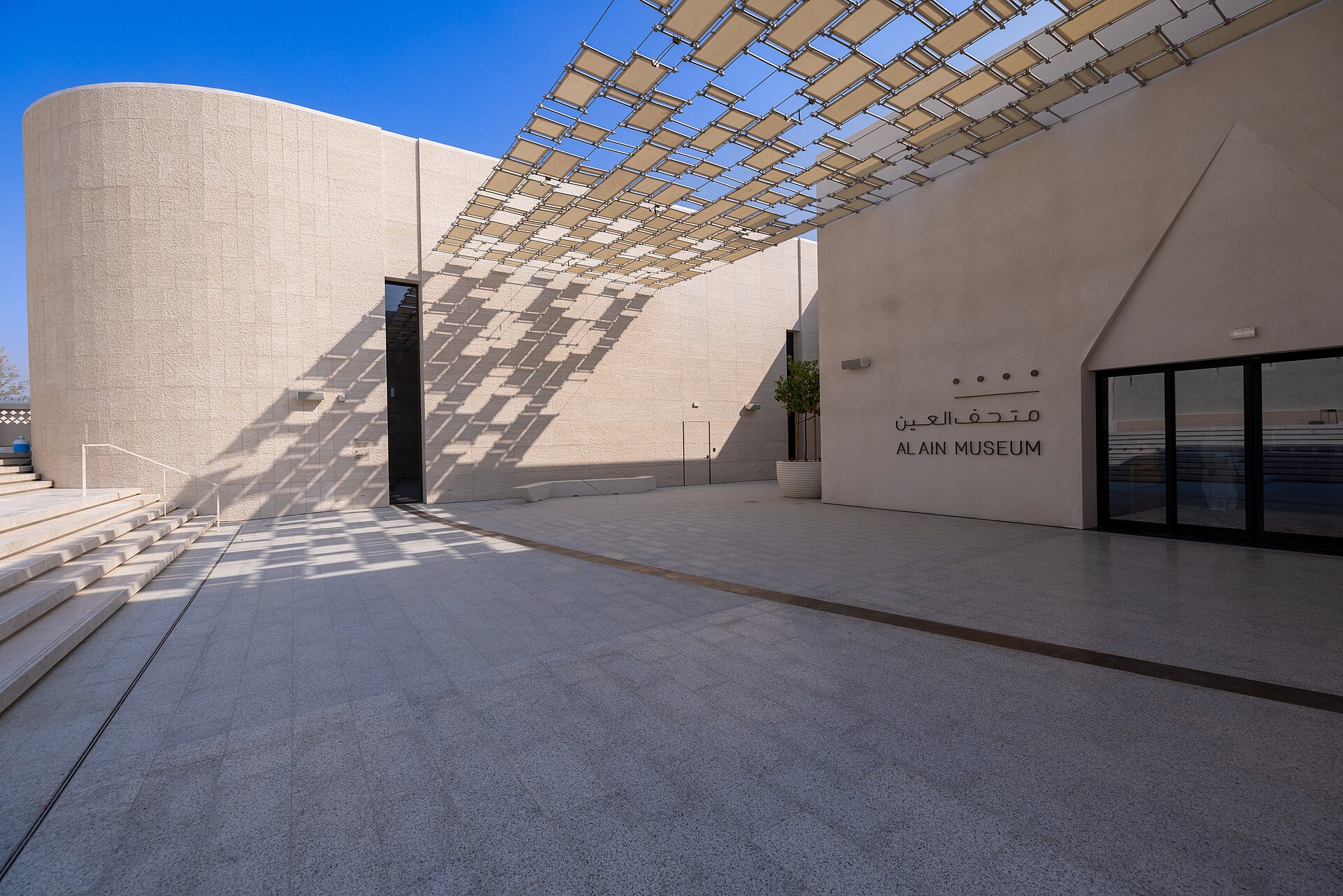
In 2018 the museum closed for what became a seven-year programme of restoration and expansion, run with Dabbagh Architects. The original 1970s museum building, roughly 1,200 square metres, was conserved rather than demolished and is now treated by the museum as a piece of modern heritage in its own right; Sultan Fort was revitalised; and new gallery space was built around it, taking the whole site to more than 8,000 square metres.
The works themselves became part of the collection. Three archaeological sites were uncovered during construction and were left and displayed exactly where they were found rather than removed to a case. The most significant is a pre-Islamic tomb more than 2,000 years old, now called the Tower Tomb, which the museum describes as the only tomb of its kind and period found at the site; the gallery built around it takes its shape from the tomb itself. A gypsum object recovered from the tomb helped identify its nature, and a smaller, simpler grave nearby produced crescent-shaped earrings, which the museum's own account of the find associates with protection, strength and femininity in the period.
The museum reopened in two stages in October 2025: a formal reopening on 23 October 2025 attended by His Highness Sheikh Hazza bin Zayed Al Nahyan, Ruler's Representative in the Al Ain Region, followed by the Department of Culture and Tourism - Abu Dhabi's own announcement of the public opening on 24 October 2025. The reopened museum has ten main galleries, a cafe, retail space, a reading room, a temporary exhibition hall, conservation laboratories and a dedicated research facility supporting ongoing excavation work in the region.
What is inside, gallery by gallery
The permanent collection is arranged as a sequence of named galleries running chronologically and thematically from prehistory to the mid-20th century: a Museum Introduction gallery setting out Al Ain's significance as a centre of settlement; a Paleolithic Period gallery covering human activity before roughly 10,000 BCE, anchored by stone tools recovered from Jebel Hafeet and Jebel Munda that the museum dates to as much as 300,000 years old; a Neolithic to Iron Age gallery (roughly 8000-300 BCE) tracing the rise of agriculture and metalworking; an Archaeological Tomb gallery on burial practice and funerary architecture, including the in-situ Tower Tomb described above; two linked Aflaj and Wells galleries on the region's falaj irrigation systems, one covering roughly 1000 BCE-300 CE and the other tracing the technology's evolution up to about 1950; a Late Pre-Islamic to Late Islamic gallery (roughly 300 BCE-1960 CE); a Late Islamic Period gallery focused on the mid-20th century; and a Visible Storage gallery that displays stored archaeological material alongside an account of how the museum conserves it.
Individual objects singled out in the museum's own account of the reopening and in press coverage include a black-painted ceramic storage vessel decorated with leaves and mountain goats from the Hili tombs; a gold necklace from the Qattara Tomb, of the Bronze Age Wadi Suq period, showing two hornless animals that scholars read as goats or ibexes without having settled which; and a Maria Theresa thaler, a silver trade coin minted in Habsburg Austria in 1741 that stayed in regional circulation, on the strength of its silver content, until the UAE dirham replaced it in 1973. Material recovered from the region also points outward: items in reddish desert-ware fabric found alongside imports are read by the museum as evidence of contact with the Indus Valley world, making the case that Al Ain sat on a trade route rather than in isolation.
Diplomatic gifts: the museum as a record of a young state's foreign relations
After the UAE's founding in 1971, Sheikh Zayed used the museum as a repository for gifts received in the course of building the new state's foreign relationships, and it still displays a small group of them. The best known is a wooden model of the Dome of the Rock, carved and inlaid with coloured mother-of-pearl, presented by Prince Hassan bin Talal of Jordan in 1976 during a visit to the museum; it is read locally as a marker of early cultural ties between the UAE and Jordan and of a shared regard for Islamic heritage. A second is a silver plate from the Grand Imam of Al-Azhar in Egypt, bearing the signature of the former Egyptian president Gamal Abdel Nasser. Both are shown as diplomatic record rather than as fine art, which is part of what distinguishes this collection from a conventional decorative-arts museum: the objects matter as much for who gave them, and why, as for their craftsmanship.
The oasis, the aflaj, and the wider Cultural Sites of Al Ain
Al Ain Museum sits on the eastern edge of Al Ain Oasis, next to Al Jahili Fort, within the Cultural Sites of Al Ain, Hafit, Hili, Bidaa Bint Saud and Oases Areas, inscribed on the UNESCO World Heritage List in 2011 as the first site in the UAE to receive that status. The aflaj irrigation systems that the museum's two Wells galleries document, channels that moved groundwater by gravity from aquifers to fields and settlements, are what made continuous long-term habitation of the oasis possible in the first place, and the museum presents its own galleries as an introduction to that wider archaeological landscape rather than a self-contained stop: its stated aim is to send visitors on afterwards to the tombs and forts scattered through the surrounding region.
The museum should not be confused with two other, separate institutions nearby. Al Jahili Fort, a short distance away, is a different historic fort managed as its own site. Qasr Al Muwaiji, also in Al Ain, is a newer, separate palace museum. Al Ain Museum's own site borders the Al Ain Palace Museum as well, which is administered separately; a Tripadvisor reviewer's December 2024 account of finding both closed for construction refers to the two as neighbouring but distinct sites.
Visiting today
The rebuilt museum keeps a single admission structure: an adult ticket costs AED 47.25, booked through the museum's own ticketing platform or bought on arrival subject to capacity; under-18s and resident senior citizens (60 and over) are admitted free, as are people of determination and one companion, all subject to identification checked on site. A further set of discounted rates, for UAE military personnel, Homat Al Watan, teachers, government staff and holders of several UAE loyalty and benefit cards, run from roughly half the adult rate to a few dirhams under it. Galleries and the cafe both keep the same hours, 9am to 7pm daily including weekends, with last entry to the galleries at 6:45pm. The museum states it is fully accessible to people of determination, with adapted pathways and a dedicated drop-off zone, and it offers guided tours, including tours aimed at children, alongside free Wi-Fi throughout the site. A temporary exhibition, Harat Al Hosn, running from October 2025 to September 2026, uses photographs, oral histories and archival material to record the residential quarter that once stood on the museum's own grounds before the 1970s rebuild displaced it, and invites visitors to contribute their own family memories, objects or photographs to the museum's ongoing record of the neighbourhood.
What visitors say
Recent visitors, writing after the October 2025 reopening, consistently describe a museum far larger and more polished than the one they remembered, with informative, well-organised galleries and helpful staff; longer-standing reviewers who knew the site before 2018 recall it fondly for its royal-family photographs, its gardens and its place as a regular, easy outing next to the oasis. A visitor writing in December 2024, before the reopening, found both the museum and the neighbouring Al Ain Palace Museum closed for construction with no signage explaining the closure, which was the sharpest complaint the record turned up.
What is praised, what is criticised
- Praised: Scale and organisation of the rebuilt museum, described as large, spacious and well-curated with a concise, informative walk through the country's history
- Praised: Staff, described as friendly and helpful, including guided tours for children
- Praised: The setting beside Al Ain Oasis and next to Sultan Fort, with gardens visitors say are worth the walk on their own
- Praised: Value for families, since under-18s and over-60s residents are admitted free
- Criticised: During the 2018-2025 closure, at least one visitor found no on-site signage explaining that the museum (and the neighbouring Al Ain Palace Museum) was shut, only learning the reason from a security guard
- Criticised: Entry that older reviews describe as free is now a paid ticket (AED 47.25 for an adult) following the redevelopment, a change repeat visitors from before 2018 may not expect
Ratings on other platforms
Tripadvisor: 4.1 from 229 ratings, read 23 September 2026
Google: 4.2 from 608 ratings, read 23 September 2026
A platform average is a tertiary source: it moves, it is not audited, and we quote no visitor's words.
Questions about Al Ain National Museum
Where is Al Ain National Museum?
46 Al Mut-haf St, Al Ain, United Arab Emirates.
How much does it cost to visit?
Adult (18+): AED 47.25; Under 18: free; Resident senior citizens (60+): free; People of determination, plus one companion: free; UAE military, Homat Al Watan, UAE teachers: AED 23.62. As confirmed 23 September 2026.
When is it open?
Daily, including weekends 09:00-19:00; Daily, including weekends 09:00-19:00. As confirmed 23 September 2026.
How do you get there?
Car: On-site parking with a dedicated drop-off zone, off Al Mut-haf Street on the eastern edge of Al Ain Oasis, close to Al Jahili Fort; Taxi: The museum's own visit page lists taxi as a route in but gives no fixed fare or stand; Bus: The museum's own visit page lists bus as a route in but names no specific line.
What should you see first?
The Tower Tomb, in its original ground (Unknown, pre-Islamic, more than 2,000 years old); Wooden model of the Dome of the Rock (Unrecorded maker; presented by Prince Hassan bin Talal of Jordan); Silver plate bearing Gamal Abdel Nasser's signature (Gift of the Grand Imam of Al-Azhar, Egypt); Gold necklace with two hornless animals, Qattara Tomb (Unknown, Wadi Suq period, roughly 3,625-4,025 years old); Maria Theresa thaler (Minted 1741, Habsburg Austria, under Empress Maria Theresa); Black-painted ceramic vessel, Hili tombs (Unknown, Iron Age).
What we could not confirm
- Wikipedia's list of nine named permanent galleries is credited to the museum's own website as its source, but no dedicated gallery-by-gallery page could be located on alainmuseum.ae itself at the time of research; a future check should look for one directly on the museum's own site rather than relying on Wikipedia's citation of it.
- Sources disagree by a day on the reopening: Time Out Abu Dhabi reports a reopening ceremony on Thursday 23 October 2025 attended by Sheikh Hazza bin Zayed Al Nahyan, while the Department of Culture and Tourism - Abu Dhabi's own media-office release announces the reopening to the public on 24 October 2025. Both are recorded here rather than picking one.
- The museum's own visit page and the Department of Culture and Tourism's separate cultural-sites portal give slightly different cafe hours (9am-7pm on the museum's own site versus 7am-11pm on the DCT portal); the museum's own site was treated as the more current and authoritative of the two.
- No published phone number could be found on the museum's own site, alainmuseum.ae, which routes all enquiries through a web contact form; the phone number recorded here comes from the Department of Culture and Tourism's own cultural-sites portal for the museum.
Images
Sources
- 1Al Ain Museum, official site, homepage alainmuseum.ae/en
- 2Al Ain Museum, official site, Visit page (hours, getting here, tickets) alainmuseum.ae/en/visit
- 3Al Ain Museum, official site, The Museum page (history, architecture, mandate) alainmuseum.ae/en/the-museum
- 4Al Ain Museum, official site, Exhibitions and Events page (Harat Al Hosn exhibition) alainmuseum.ae/en/exhibitions-events
- 5Al Ain Museum, official site, FAQ page alainmuseum.ae/en/faq
- 6Al Ain Museum, official ticketing platform (admission tiers and prices) tickets.alainmuseum.ae/?lang=en
- 7Department of Culture and Tourism - Abu Dhabi, Abu Dhabi Culture portal, Al Ain Museum page (address, phone, email, hours, collection note) abudhabiculture.ae/en/cultural-sites/museums/al-ain-museum
- 8Department of Culture and Tourism - Abu Dhabi, official site, Al Ain Museum page (founding and inauguration history) dct.gov.ae/en/what.we.do/culture/museums/al.ain.national.muesum.aspx
- 9Wikipedia, "Al Ain Museum" (tertiary; gallery list cited to the museum's own site, coordinates, closure and reopening years) en.wikipedia.org/wiki/Al_Ain_National_Museum
- 10Wikidata, Q1052105, "Al Ain National Museum" (tertiary; identity and coordinates) wikidata.org/wiki/Q1052105
- 11Department of Culture and Tourism - Abu Dhabi, media office release on the museum's reopening mediaoffice.abudhabi/en/arts-culture/department-of-culture-and-tourism-abu-dhabi-to-reopen-al-ain-museum-to-public-on-24-october-following-extensive-redevelopment/
- 12Khaleej Times, "Al Ain museum reopens: Ancient artefacts, diplomatic gifts; here's what's inside", Arwa Almazrouei, 24 October 2025 khaleejtimes.com/uae/al-ain-museum-reopens-2025-ancient-artefacts-diplomatic-gifts-whats-inside
- 13Time Out Abu Dhabi, "The historic Al Ain Museum has officially reopened", Sian Traynor, 23 October 2025 timeoutabudhabi.com/news/al-ain-museum-reopened
- 14Wanderlust, "The UAE's first museum has just reopened after a major renovation", 10 November 2025 wanderlustmagazine.com/news/al-ain-museum-reopens/
- 15Tripadvisor, "Al Ain Museum" listing and visitor reviews tripadvisor.com/Attraction_Review-g298061-d1655018-Reviews-Al_Ain_Museum-Al_Ain_Emirate_of_Abu_Dhabi.html