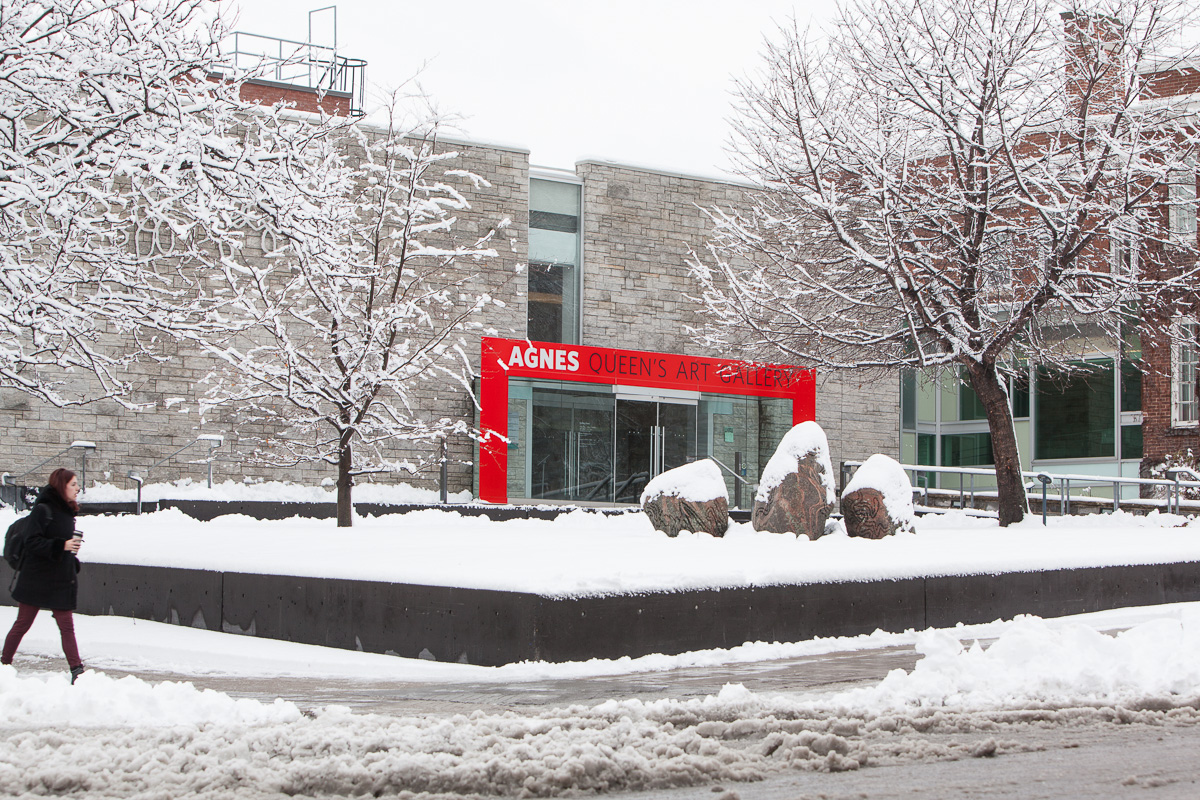
The University Avenue entrance of the Agnes Etherington Art Centre, with the AGNES Queen's Art Gallery signage visible over the doors, photographed in winter before the Agnes Reimagined closure.
KingstonianW · CC BY-SA 4.0Closed to visitors - not permanently
Agnes Etherington Art Centre is currently closed. Not open and not permanently closed. The museum's own site states plainly 'we are currently closed' and that Agnes has wrapped up its offsite exhibition space in Rideau Building ahead of the Agnes Reimagined reopening. Queen's University's own facilities news office puts the closure of the original 36 University Avenue building at 29 March 2024, with construction beginning 13 May 2024 for a full demolition-and-rebuild on the same site.
Expected to reopen: September 2026 · a target, not yet confirmed
Closure confirmed from the institution's own page. We re-check this page on a schedule and will update it, from the institution's own announcement, the moment it reopens.
On this page 14 sections
ContentsClose
The Agnes is disproportionately strong in one narrow area for an institution its size: Dutch and Flemish Golden Age painting, carried almost entirely by five decades of gifts from Alfred and Isabel Bader, which sourced accounts describe as making it home to Canada's most extensive public collection of works attributed to Rembrandt. Its second, less publicised strength is breadth outside Europe: the Lang collection makes it one of the largest public holders of African art in Canada, and its Indigenous and Canadian historical collections are large enough that Agnes Reimagined is being built in part to give them dedicated, non-hierarchical space alongside the European rooms rather than beneath them.
| Kind | Museum |
|---|---|
| Founded | 1957 |
| City and country |  Kingston, Canada Kingston, Canada |
| Address | Queen's University, 36 University Avenue, Kingston, Ontario, Canada K7L 3N6 |
| Website | agnes.queensu.ca |
| Status | Closed temporarily, confirmed |
| Record last verified |
Visiting
- Hours (pre-closure)
- All daysNo public hours currently apply. The museum's own hours page states 'we are currently closed' and that Agnes has wrapped up its offsite exhibition space ahead of reopening in the rebuilt Agnes Reimagined building; it publishes no schedule pending that reopening. An attempt to recover the pre-closure weekly schedule from the Internet Archive was made during research but the archive was temporarily offline, so no verified pre-closure hours are carried here rather than guess at them.
- Closed
- Entirely without public hours since the original building closed to visitors on 29 March 2024 for the Agnes Reimagined rebuild.
- Admission (pre-closure)
- General admissionFreeFree admission, donations welcomed. This is the museum's standing admission policy, stated on its own visit page, and is unaffected by the current closure since no ticketed entry has ever applied.
- Do I need to book?
- Not applicable at present; the museum is closed and its own visit pages carry no booking information. Historically, general admission required no advance ticket.
- Address
- Queen's University, 36 University Avenue, Kingston, Ontario, Canada K7L 3N6 MapBus Served by Kingston Transit routes into the Queen's University campus in downtown Kingston; the museum's own site does not currently publish route numbers for the 36 University Avenue building while it is under reconstruction
- Website
- agnes.queensu.ca
- Telephone
- +1 613-533-2190
- [email protected]
Before you go how long, access, photography, bags, eating, shop
- How long to allow
- Visitor accounts on Tripadvisor consistently describe the pre-closure galleries as compact, a 'wee' or 'small' museum manageable in under an hour, with the Bader Collection of Dutch and Flemish Old Masters cited as the main reason to make a special trip to Kingston for it. (source: sources[10], not sources[9])
- Access
- Not stated on the museum's current visit pages while it is closed. The Agnes Reimagined design, as reported by The Globe and Mail, adds two elevators to the new building specifically to improve accessibility over the previous premises.
- Photography
- Not stated on the museum's current visit pages while it is closed.
- Bags
- Not stated on the museum's current visit pages while it is closed.
- Eating
- No cafe operated in the pre-closure building. The Agnes Reimagined design adds a cafe to the new ground-floor welcome centre, per Queen's University's own facilities project page and Globe and Mail reporting.
- Shop
- Not stated on the museum's current visit pages while it is closed.
The museum is closed (see above). These are the figures published before the closure, kept here for a visitor planning ahead rather than presented as bookable today, and you can check the current position at the source we used. We will re-confirm them once it reopens.
What is inside
Etherington House
The original 1879 mansion built for the Richardson family, remodelled in Georgian style in the 1920s and bequeathed by Agnes Etherington in 1954. It held the gallery's historic period rooms before the closure. Under Agnes Reimagined it is being returned to a lived-in state as an artist-in-residence house and community hub, honouring Etherington's own wish that the house 'further the cause of art and community.'
European Historical Art / the Bader Collection
More than 200 Dutch and Flemish Golden Age paintings given by Alfred and Isabel Bader, the cornerstone of the European collection, including Canada's most extensive public holding of works attributed to Rembrandt alongside El Greco, Adam Elsheimer, Jan Lievens, Ferdinand Bol, Jacob van Ruisdael and Aert de Gelder.
Canadian Historical Art
Historical Canadian painting including works associated with Tom Thomson, Emily Carr and Lawren Harris, alongside the Zacks collection of contemporary and historical Canadian art.
Indigenous Art
Inuit and First Nations works, including prints and sculpture by artists such as Kananginak Pootoogook and Pitseolak Ashoona; the Agnes Reimagined design adds dedicated Indigenous Self-Determination Spaces and an outdoor medicine garden to this part of the collection's public presentation.
African Historical Art / the Lang Collection
The Justin and Elisabeth Lang Collection of more than 500 objects from West and Central African peoples, described by the museum's own reporting as one of the largest public collections of African art in Canada.
Collection of Canadian Dress and the Heritage Quilt Collection
A dedicated holding of historical Canadian dress and quilts, listed by the museum among its named collecting areas alongside the fine-art departments.
Contemporary Art
An active contemporary collecting and exhibition programme, named by the museum as one of its core departments alongside the historical collections.
What to see first
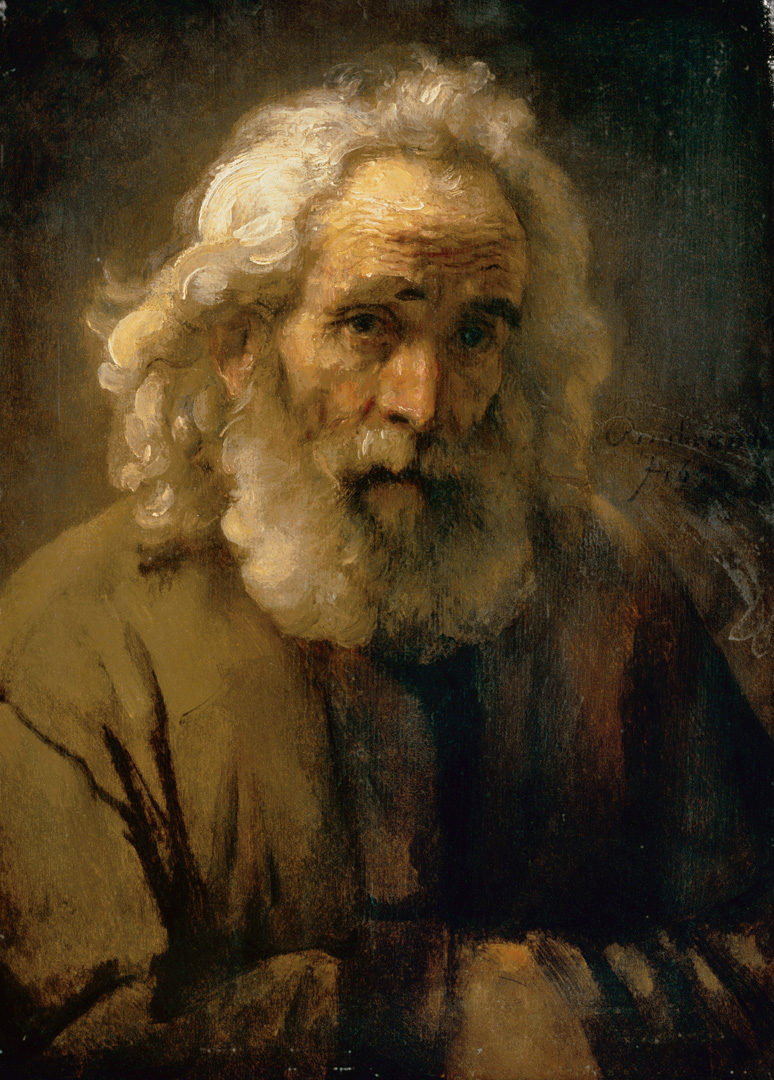
Head of an Old Man with Curly Hair
Rembrandt van Rijn, 1659A Bader Collection character study; the museum's own object record supplies the Commons reproduction used as this page's second plate.13
Head of a Man in a Turban
Rembrandt van Rijn, c. 1661A second Rembrandt character study from the Bader gift, part of what Wikipedia's sourced account calls Canada's most extensive public Rembrandt holding.14
Salvator Mundi
Girolamo da Santacroce, c. 1520sAn early-cinquecento Venetian panel, not the Leonardo-attributed painting of the same subject sold in 2017; this was Alfred Bader's first gift to the museum, in 1967, a picture that had previously belonged to his own mother.2
The Adoration of the Shepherds
El Greco, 1570A Bader Collection Mannerist altarpiece scene, one of the collection's best-documented Spanish Old Master works.2
Winter Landscape with a Wooden House
Jacob van Ruisdael, c. 1667-1673A Dutch Golden Age landscape from the Bader gift, representative of the seventeenth-century Netherlandish holdings the collection is best known for.2
The Justin and Elisabeth Lang Collection of African Art
Various West and Central African makersOver 500 objects; the museum's own account describes it as one of the largest public collections of African art in Canada, giving the museum a depth outside its European reputation.2
Inuit and First Nations works by Kananginak Pootoogook and Pitseolak Ashoona
Kananginak Pootoogook; Pitseolak AshoonaAnchors of the Indigenous art collection, a department the museum names as one of its core strengths and is expanding physically under Agnes Reimagined.2
Canadian Historical Dress and Heritage Quilt Collection
Various Canadian makersA specialised material-culture holding the museum lists among its named departments, distinguishing it from a conventional fine-art-only university gallery.6
A house given to further the cause of art
The Agnes Etherington Art Centre exists because one woman gave away her home. Agnes McCausland Richardson Etherington (1880-1954) belonged to the family behind James Richardson and Sons, the Kingston grain business founded in 1857; an inheritance from her brother George, killed in the First World War, became the George Taylor Richardson Memorial Fund that still supports the arts at Queen's University today. Etherington had already spent decades building Kingston's arts infrastructure by the time of her death: she co-founded the Kingston Art and Music Club in 1926. In 1954 she bequeathed her own house on University Avenue to the university, on the stated understanding that it would further the cause of art and community. The gallery that resulted opened to the public in 1957, taking her name.
That founding gift is why the current rebuild project, closing the museum for more than two years, is named for returning a house to a home rather than for a new building: the organising idea behind Agnes Reimagined is explicitly a return to Etherington's own 1954 language, not a break from it.
From mansion to modern museum: the building before Agnes Reimagined
The building Etherington gave was itself already old by 1957: a red-brick Victorian mansion built in 1879 for the Richardson family, remodelled in a Georgian idiom in the 1920s. The gallery grew around that core in stages rather than in one campaign, with additions recorded in 1962, 1975 and 1978, and then a further seven-million-dollar-plus renovation completed in 2000 that brought the museum to roughly 1,720 square metres and improved its climate control. By the time of the 2024 closure the complex held nine galleries by Wikipedia's count (a slightly earlier account from Queen's own encyclopedia entry gives seven exhibition galleries and a studio, reflecting the museum before its most recent expansions), the historic Etherington House rooms, the Bieler Studio, an atrium, a publications lounge and the David McTavish Art Study Room, a dedicated space for close study of works on paper and other objects not permanently on view.
That patchwork, added to across six decades, is part of what Agnes Reimagined is meant to resolve: Queen's own facilities office describes the finished project as roughly doubling existing gallery space and becoming, on completion, the largest public university-affiliated museum in Canada.
The Bader Collection and the Dutch Golden Age
Nothing else at the Agnes carries the weight of the Bader gift. The chemist and philanthropist Alfred Bader, with his first wife Helen and later his second wife Isabel, gave the museum more than two hundred paintings over several decades, concentrated on Dutch and Flemish religious and genre scenes from the seventeenth century, and the gift is the reason a university gallery in a city of roughly 130,000 people holds what sourced accounts describe as Canada's most extensive public collection of works attributed to Rembrandt. Bader's first gift, in 1967, was itself personal rather than merely generous: a Salvator Mundi attributed to the early-sixteenth-century Venetian painter Girolamo da Santacroce, a picture that had previously belonged to his own mother. It is not the Leonardo-attributed panel of the same subject that sold at Christie's in 2017 for a record price; the two paintings share only a title and a subject.
Around that core sit further Bader-collection works: an El Greco Adoration of the Shepherds from 1570, a Jacob van Ruisdael winter landscape from the late 1660s, and paintings by Adam Elsheimer, Jan Lievens, Ferdinand Bol and Aert de Gelder. Isabel Bader's own bequest on her death in 2022 added a further 44 paintings, reported at the time to be worth in the region of 12 million dollars, extending a relationship between one family and one Canadian university gallery that by then had run for more than fifty years.
Beyond Europe: Canadian, Indigenous and African collections
The Bader name dominates the Agnes's public reputation, but the museum's own account of its holdings organises them into six collecting areas of roughly equal institutional standing: Indigenous art, contemporary art, Canadian historical art, European historical art, African historical art, and a combined Collection of Canadian Dress and the Heritage Quilt Collection. Across all of them the museum reports holding more than 17,000 works.
The Canadian historical collection includes work associated with Tom Thomson, Emily Carr and Lawren Harris alongside the Zacks collection of Canadian art. Indigenous holdings include Inuit prints and sculpture, with pieces by Kananginak Pootoogook and Pitseolak Ashoona among the artists named in sourced accounts; Agnes Reimagined adds dedicated Indigenous Self-Determination Spaces and an outdoor medicine garden specifically to this part of the museum's public program, developed through a multi-year series of community sharing circles rather than designed in isolation by the architects. The African collection rests on the Justin and Elisabeth Lang gift of more than 500 objects from West and Central African peoples, described in sourced accounts as one of the largest public collections of African art in Canada. The dress and quilt collection is smaller in profile but distinguishes the Agnes from a conventional fine-art-only university gallery.
Agnes Reimagined: a total rebuild, 2024 to 2026
The museum closed its original 36 University Avenue building to visitors on 29 March 2024. Construction began on 13 May 2024, and the museum has been operating an offsite exhibition space at the Rideau Building on Stuart Street in Kingston while the main site is rebuilt; as of August 2026 that offsite programme has itself wrapped up ahead of the main reopening, and the museum's own site states plainly that it is currently closed. The project, called Agnes Reimagined, is funded chiefly by a US 75 million dollar gift from Bader Philanthropies Inc, continuing the family's decades-long relationship with the museum.
The architects are KPMB, the Toronto firm behind Remai Modern in Saskatoon and the Ottawa Art Gallery, working to a design process that Canadian Architect and The Globe and Mail both describe as unusually collaborative: two years of community engagement sessions run as sharing circles, on a model drawn from Anishinaabe talking-circle practice and led by the artist Georgina Riel, informed the schematic design in 2022 and design development in 2023 before construction began. The finished building is planned as a three-storey building with roughly double the existing gallery space including a curvilinear pavilion, a ground-floor welcome centre built around hospitality rather than a conventional lobby, two elevators added specifically for accessibility, a cafe, dedicated Indigenous Self-Determination Spaces, and multiple climate-controlled archives designed to accommodate both Western and Indigenous curatorial protocols. Etherington House itself is being returned to residential use as a live-in artist residency, the project's most literal reading of Etherington's original 1954 gift.
The museum's own site currently gives September 2026 as the point at which construction and renovation activity was originally expected to end, but the same page lists 'Planning the Opening' as a still-unscheduled future sharing circle, marked TBD rather than dated, and the inaugural exhibition that will mark the reopening, titled Living Arrangements, had not been given a firm public date as of this research. That combination is why this page records the reopening as a target rather than a confirmed date.
Visiting Agnes, and what changes when it reopens
Admission to the Agnes has always been free, with donations invited rather than required, and nothing in the museum's own communications about Agnes Reimagined suggests that will change. What will change is scale and character: a compact, additions-upon-additions building that visitors on Tripadvisor consistently described as small, walkable in under an hour, becomes on the museum's own account the largest public university-affiliated museum in Canada, with roughly double the gallery space and a ground floor built explicitly around informal, non-ticketed hospitality rather than a conventional admissions desk.
The best-documented complaint about the old building, a 2019 account of unreadable object labels paired with a strict close-viewing rule enforced by a gallery attendant, points at exactly the kind of friction a larger, more deliberately hospitable building is designed to remove; whether it does is not yet knowable from any source available at the time of this research, since the building the complaint describes has since been demolished. Readers planning a visit around the reopening should expect the museum's own hours-and-admission page, not this one, to carry the first confirmed operating schedule once Agnes Reimagined opens.
What visitors say
Visitors consistently describe a small, easy-to-see university gallery whose reputation outruns its physical size, built almost entirely on the strength of the Bader gift of Dutch and Flemish Old Masters, especially its Rembrandts. Reviewers repeatedly frame a visit as a deliberate detour to Kingston specifically to see that collection, not a stop made in passing. Free admission is mentioned often and favourably.
What is praised, what is criticised
- Praised: The depth of the Dutch Golden Age holdings from the Bader gift, named specifically for its Rembrandt, Jan Lievens and Arent de Gelder paintings
- Praised: Free general admission
- Praised: The historic character of Etherington House and its period rooms as part of the pre-closure visit
- Praised: Friendly front-of-house staff, praised generically across several Tripadvisor accounts (no reviewer names a specific staff member)
- Praised: The quality and variety of rotating special exhibitions alongside the permanent Old Master rooms
- Criticised: The modest physical size of the pre-closure building, described by visitors as 'a few rooms' or a 'wee museum', enough for some to feel it was a short visit relative to the detour
- Criticised: Inconsistent visitor experience around close viewing: one detailed 2019 account describes object labels printed in a font too small to read from the standard viewing distance, then being told by a gallery attendant to step back from the art, a combination the reviewer called contradictory
- Criticised: At least one visit reported a technical failure that took an audio-visual exhibit component out of service during the visit
Ratings on other platforms
Tripadvisor: 4.4 from 63 ratings, read 17 August 2026
A platform average is a tertiary source: it moves, it is not audited, and we quote no visitor's words.
Questions about Agnes Etherington Art Centre
Where is Agnes Etherington Art Centre?
Queen's University, 36 University Avenue, Kingston, Ontario, Canada K7L 3N6.
How much does it cost to visit?
General admission: free. As confirmed 17 August 2026.
When is it open?
All days closed. Closed: Entirely without public hours since the original building closed to visitors on 29 March 2024 for the Agnes Reimagined rebuild. As confirmed 17 August 2026.
How do you get there?
Bus: Served by Kingston Transit routes into the Queen's University campus in downtown Kingston; the museum's own site does not currently publish route numbers for the 36 University Avenue building while it is under reconstruction.
What should you see first?
Head of an Old Man with Curly Hair (Rembrandt van Rijn, 1659); Head of a Man in a Turban (Rembrandt van Rijn, c. 1661); Salvator Mundi (Girolamo da Santacroce, c. 1520s); The Adoration of the Shepherds (El Greco, 1570); Winter Landscape with a Wooden House (Jacob van Ruisdael, c. 1667-1673); The Justin and Elisabeth Lang Collection of African Art (Various West and Central African makers).
What we could not confirm
- The Agnes Reimagined reopening date is not yet firm. The museum's own site names September 2026 as the point construction was expected to end but lists 'Planning the Opening' as an unscheduled future sharing circle (TBD) on the same page, and no firm public date for the inaugural exhibition, Living Arrangements, had been announced as of this research.
- The pre-closure weekly opening hours could not be independently verified for this page. The museum's own hours page currently carries no schedule, and the Internet Archive was unreachable during research; a future update should attempt to recover and cite the last confirmed pre-closure schedule, or confirm the first post-reopening schedule directly, rather than carry an unsourced guess.
Images

Sources
- 1Wikidata, Agnes Etherington Art Centre (Q4693034) wikidata.org/wiki/Q4693034
- 2Wikipedia, Agnes Etherington Art Centre en.wikipedia.org/wiki/Agnes_Etherington_Art_Centre
- 3Queen's Encyclopedia, Agnes Etherington Art Centre queensu.ca/encyclopedia/a/agnes-etherington-art-centre
- 4Agnes Etherington Art Centre, Agnes Reimagined (museum's own site, closure status and project timeline) agnes.queensu.ca/agnes-reimagined/
- 5Agnes Etherington Art Centre, Hours and Admission (museum's own site) agnes.queensu.ca/visit/hours-and-admission/
- 6Agnes Etherington Art Centre, Collections overview (museum's own site) agnes.queensu.ca/explore/collections/overview/
- 7Queen's University Facilities, Agnes Etherington Art Centre project page queensu.ca/facilities/projects/agnes-etherington-art-centre
- 8Queen's University Gazette, 'Queen's University art centre set to become the largest university museum in Canada' queensu.ca/gazette/stories/queen-s-university-art-centre-set-become-largest-university-museum-canada
- 9Tatum Dooley, 'In Kingston, an art gallery is reimagined with hospitality and collaboration', The Globe and Mail, 21 November 2024 theglobeandmail.com/arts/art-and-architecture/article-in-kingston-an-art-gallery-is-reimagined-with-hospitality-and/
- 10Tripadvisor, Agnes Etherington Art Centre reviews tripadvisor.com/Attraction_Review-g154992-d538077-Reviews-Agnes_Etherington_Art_Centre-Kingston_Ontario.html
- 11Wikimedia Commons, Category:Agnes Etherington Art Centre commons.wikimedia.org/wiki/Category:Agnes_Etherington_Art_Centre
- 12Wikimedia Commons, File:Agnes Etherington Art Centre Winter.jpg commons.wikimedia.org/wiki/File:Agnes_Etherington_Art_Centre_Winter.jpg
- 13Wikimedia Commons, File:Head of an Old Man with Curly Hair, Rembrandt van Rijn, 1659, Agnes Etherington Art Center.jpg commons.wikimedia.org/wiki/File:Head_of_an_Old_Man_with_Curly_Hair,_Rembrandt_van_Rijn,_1659,_Agnes_Etherington_Art_Center.jpg
- 14Wikimedia Commons, File:Head of a Man in a Turban, Rembrandt van Rijn, 1661, Agnes Etherington Art Center.jpg commons.wikimedia.org/wiki/File:Head_of_a_Man_in_a_Turban,_Rembrandt_van_Rijn,_1661,_Agnes_Etherington_Art_Center.jpg
- 15Agnes Etherington Art Centre, Getting Here (museum's own site) agnes.queensu.ca/visit/getting-here/
- 16Agnes Etherington Art Centre, About Agnes (museum's own site, source of Etherington's 1954 bequest language) agnes.queensu.ca/connect/about-agnes/


