Lotus Lamp
- Artist
- Tiffany Studios, New York
- Date
- c. 1900-1910; the Toledo Museum of Art dates its example about 1905
- Medium
- Leaded Favrile glass, blown Favrile glass, glass mosaic and patinated bronze
- Dimensions
- Toledo Museum of Art example, overall 87.6 x 71.1 x 71.1 cm (34 1/2 x 28 x 28 in.). The example sold at Christie's in 1997 is recorded at 34 3/4 in. high with a shade 28 in. in diameter.
- Inscriptions
- The example sold at Christie's in 1997 has a base impressed TIFFANY STUDIOS NEW YORK 352. The Toledo Museum of Art online record does not list marks.
- Attribution
- disputedThe manufacturer is not in doubt: Tiffany Studios, New York, from the Corona works in Queens, with a bronze base carrying the firm's die-stamped mark. The designer is. The Toledo Museum of Art catalogues its example with a separate DESIGNER line reading Clara Pierce Wolcott Driscoll (American, 1861-1944), which is an institutional attribution made in the wake of the 2005 discovery of Driscoll's letters. That reattribution is secure for a named list of models the letters describe her inventing. The Lotus is not on that published list in any source consulted here. It falls instead into a large residual class: lampshades produced by the Women's Glass Cutting Department, which Driscoll ran from 1892 to 1909 and which held the exclusive right to design the firm's lampshades after the 1903 union settlement. Read the Driscoll credit on this model as a strong departmental inference, not as a letter naming the lamp. Louis Comfort Tiffany's personal authorship of it is supported by nothing at all beyond the firm's own long-standing practice of putting his name on everything.
The most elaborate and the most expensive lamp Tiffany Studios ever put in a catalogue: a 28-inch leaded shade of lotus blossoms with an irregular undulating border, eight blown Favrile globes hung from chased bronze tendrils, and a base of glass mosaic worked as a spreading lotus leaf. It retailed at 750 dollars in 1906, when a Wisteria cost a few hundred. Three examples are reported known. This record is about the model and names the individual examples separately, because reproductions of this design are made to order today and the type is far more famous than any one object.
It is also a test case for the single most consequential event in Tiffany scholarship. In 2005 two researchers independently found several hundred letters written by Clara Driscoll, head of the Women's Glass Cutting Department, to her mother and sisters in Ohio. Tiffany Studios destroyed its own records when it closed, so the letters are effectively the only first-person account of how the lamps were made and who conceived them. They moved a body of celebrated designs off Louis Comfort Tiffany and onto a woman whose name had disappeared from the literature. The Toledo Museum of Art now catalogues its Lotus with Driscoll as designer.
The auction record for a Tiffany Studios leaded lamp is not held by this model. It is held by a Magnolia floor lamp of about 1910, attributed to Agnes Northrop, sold at Sotheby's New York on 11 December 2025 for a reported 4.4 million dollars. The Pink Lotus held the record from 1997, at 2,807,500 dollars, until a Pond Lily took it in 2018.
Images
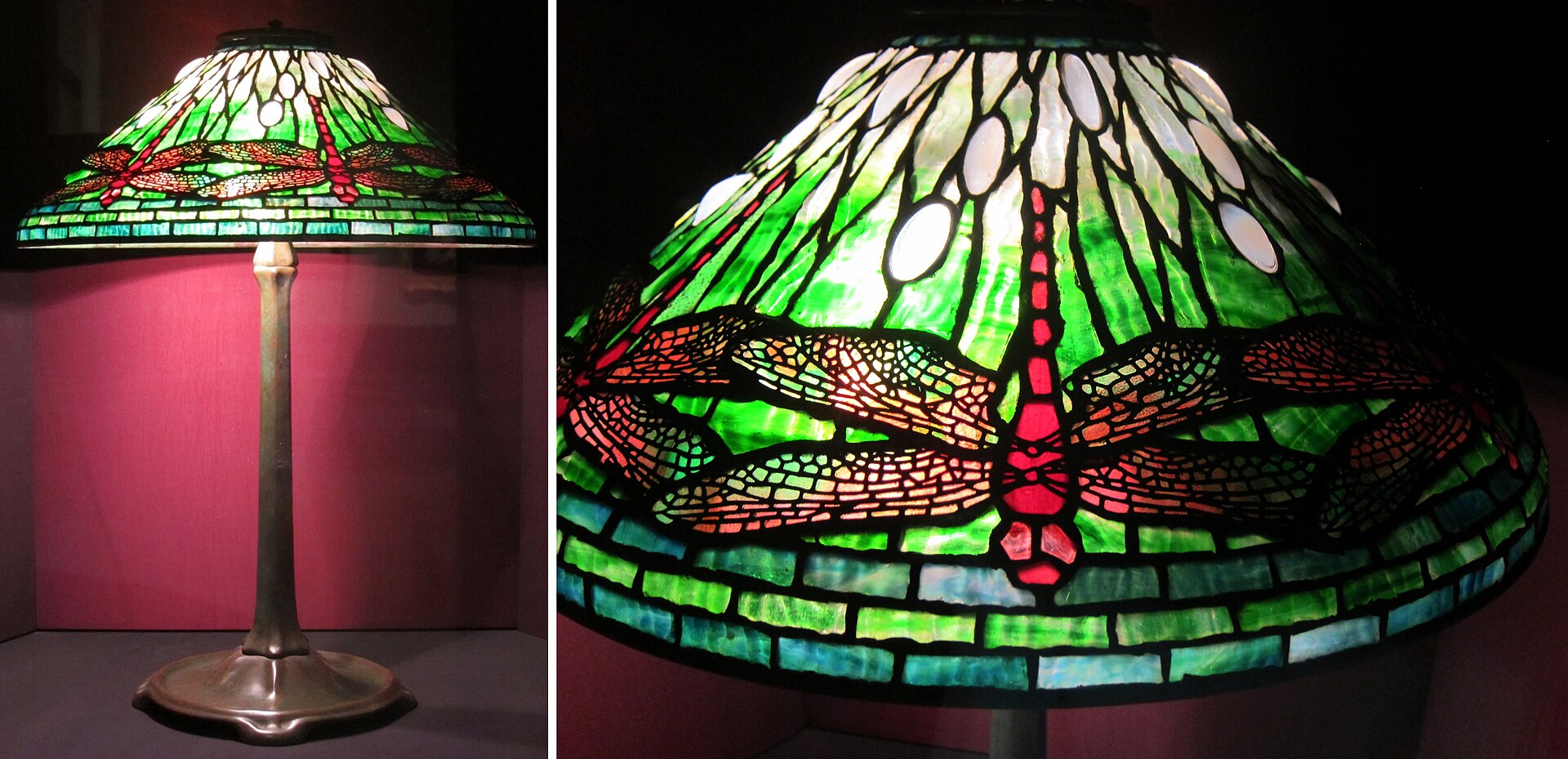
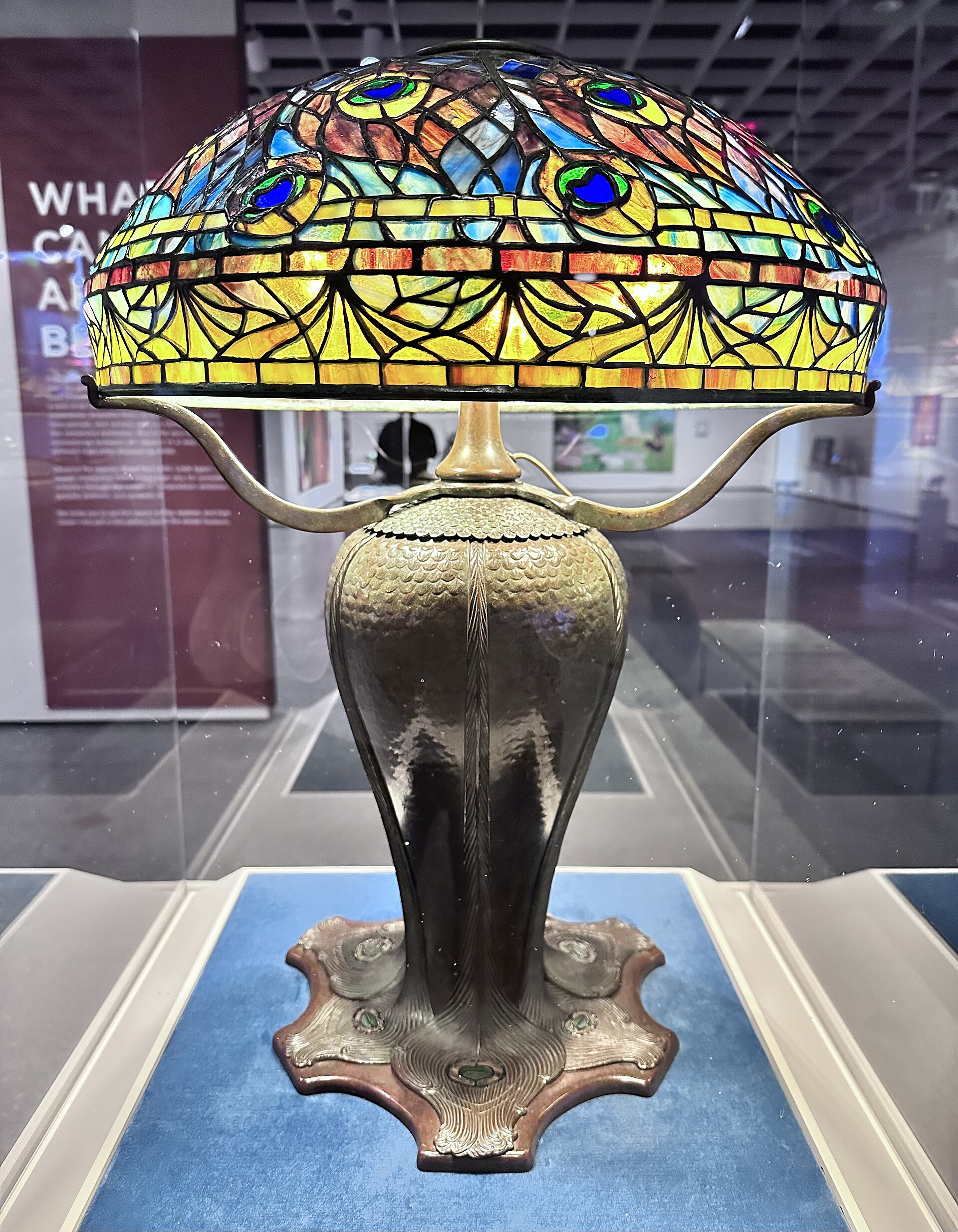
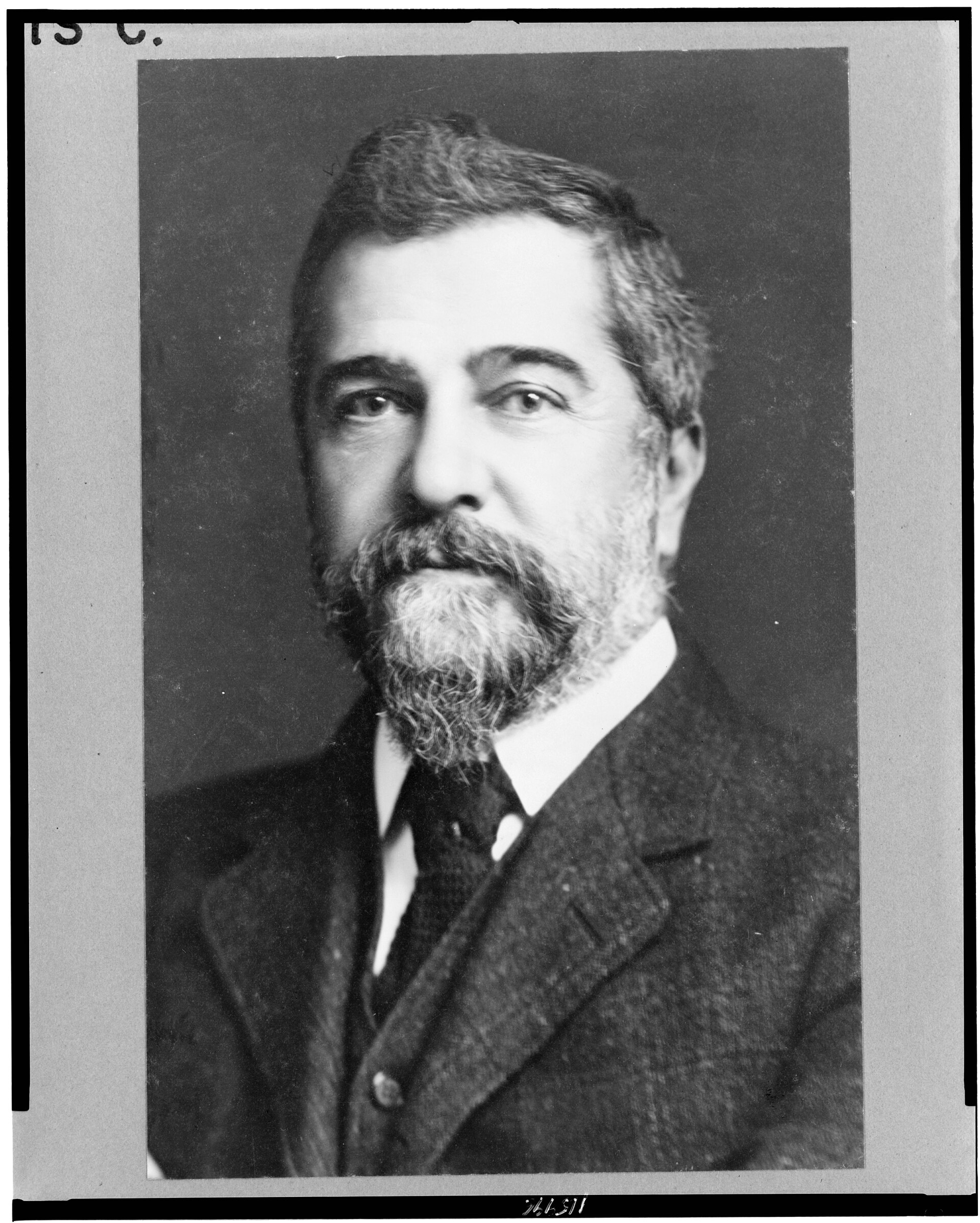
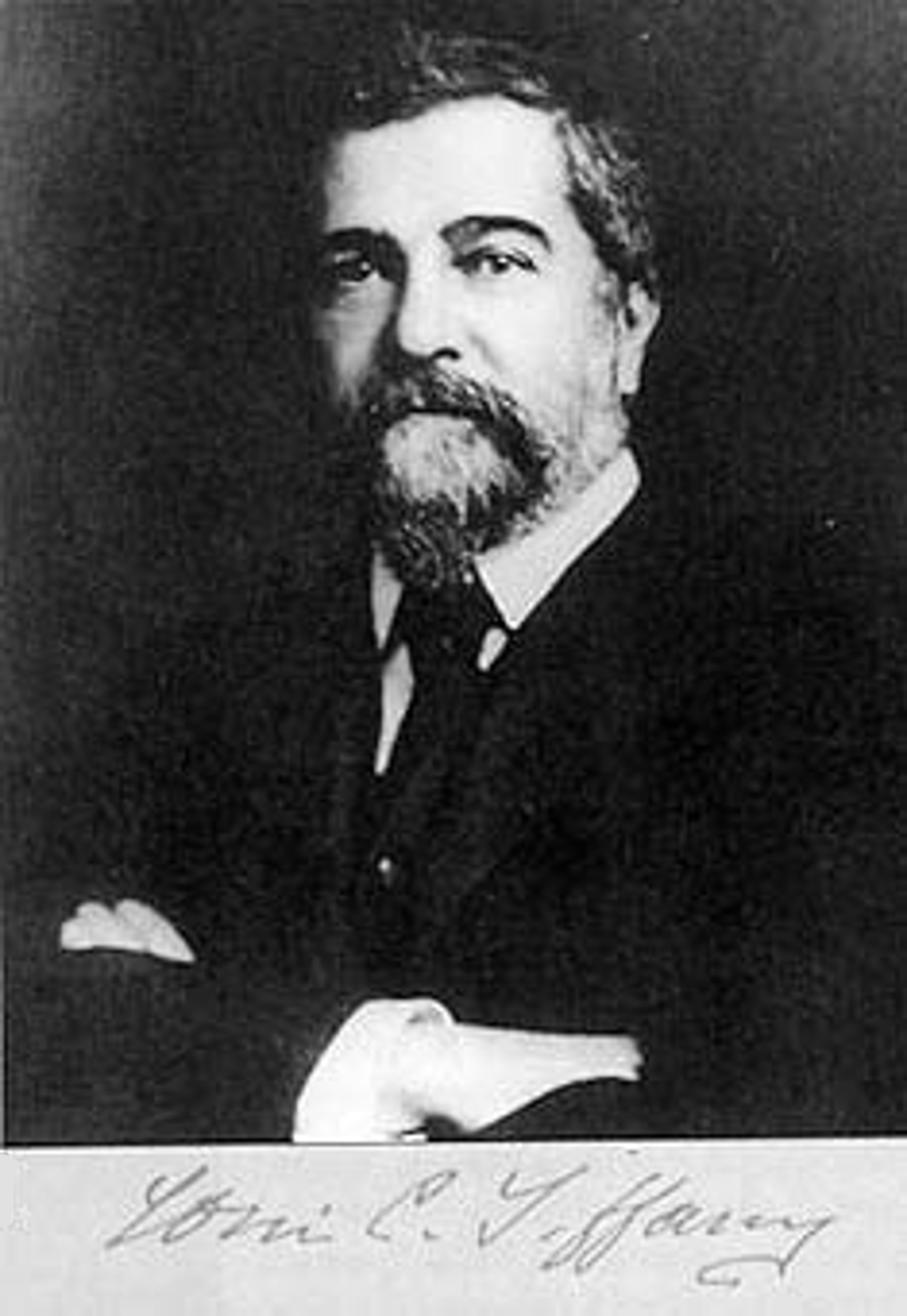
The artist
Tiffany Studios, New York; Louis Comfort Tiffany (1848-1933) and Clara Pierce Wolcott Driscoll (1861-1944)
Two names have to be carried together here, and the reason is documentary rather than sentimental. Tiffany Studios published only one of them, then destroyed its records. What survives on the other side is a private correspondence found in 2005 in two archives at once. The result is a firm whose most celebrated products are securely made and insecurely designed, and where the honest statement of authorship is a description of a department rather than a signature. What follows sets out what each of the two is now credited with, and on what evidence.
This record is about a model, and three objects
Tiffany Studios was a manufactory. It did not make unique works; it made catalogue models in editions whose sizes were mostly never recorded, and the surviving corporate paperwork that would tell us how many is gone. Any record about a Tiffany lamp therefore has to say, in its first line, whether it is describing a design or a thing. This one describes a design, and then names the individual objects underneath it.
The design is the Lotus, commonly called the Pink Lotus after the best-known example. Three are reported known. One is in the Toledo Museum of Art, accession 2022.28A-J, dated about 1905 and recorded as not on view. One is the pink example sold at Christie's New York in December 1997, whose base is impressed TIFFANY STUDIOS NEW YORK 352 and which has not been publicly seen since. One is a red example from the collection of Maurice and Margo Cohen, sold at Christie's New York in November 1999; Toledo cites both sales as comparanda for its own lamp, which implies its lamp is a third object rather than either of them resurfacing.
One correction belongs here rather than in a footnote. The Lotus is not the Lotus Bell. The Lotus Bell is a separate, much simpler Tiffany model: a small accordion-pleated bell shade, a junior version of the 25-inch Mandarin Lotus, with applied wirework on the pleats. The two are conflated constantly in the trade and in casual writing. Nothing in this record applies to the Lotus Bell.
The most expensive lamp in the catalogue
The shade is roughly 28 inches across, wide and undulating, with an irregular lower border rather than a closed rim. The pattern runs all over: lotus blossoms, seed pods and leafage at different stages of opening, in mottled rose, cranberry, orange, lavender, streaky white with blue, emerald green and lemon yellow. Below the shade the bronze continues as scrolling branches, chased to read as vines, carrying two rows of fittings. The upper row has eight sockets, each holding a blown Favrile shade; on the Toledo lamp these are pearly opalescent with mint-green striated feathering edged in amber iridescence, and on the Christie's example they are globes made to read as pink lotus flowers. The lower four branches on the Toledo lamp have bare sockets. The base is glass mosaic, green tesserae laid as a single large spreading lotus leaf.
The Toledo Museum of Art states that the lamp took more than a dozen designers, glass selectors, cutters and glaziers to make, and that it was the most expensive lamp Tiffany Studios sold, retailing at 750 dollars in 1906. For scale, a Wisteria table lamp is recorded at 400 dollars in 1906 in one account and 250 dollars in another. Seven hundred and fifty dollars in 1906 bought a large object of furniture or a small piece of real estate. Nothing about this lamp was a domestic default; it was the top of the range, and that is why so few were made.
The letters that moved the credit
Louis Comfort Tiffany ran his firm on a policy of anonymity. Employees were not publicly named. The one recorded breach came at the Paris Exposition Universelle of 1900, where the organisers obliged exhibitors to disclose the individuals responsible for the work, and prizes went to Clara Driscoll for a Dragonfly lamp and to Arthur J. Nash for glass. Otherwise the credit went to Tiffany, and for a century the literature followed the credit.
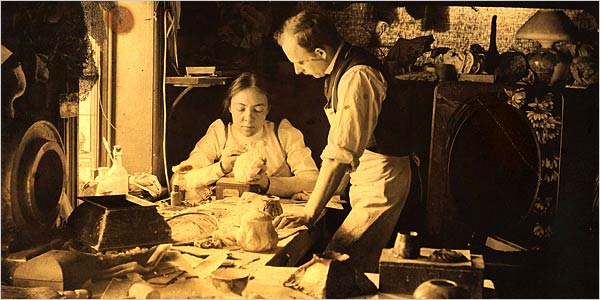
Driscoll, born Clara Pierce Wolcott in Tallmadge, Ohio in 1861, came to New York in 1888, studied at the Metropolitan Museum Art School as the only woman in architectural decoration, and was hired by Tiffany the same year. The firm required its women to be unmarried, so her employment broke three times: she left on marrying Francis Driscoll in 1889, returned after his death in 1892, left again on an engagement, returned when the fiance disappeared, and left for good in 1909 on marrying Edward A. Booth. From 1892 she ran the Women's Glass Cutting Department, which grew from six women to thirty-five and which some accounts put as high as fifty. In 1903 the all-male glaziers' union moved to shut the department down. The settlement capped the women at twenty-seven and confined them to lampshades and small luxury goods; in exchange, Driscoll's department kept the exclusive right to design every lampshade and fancy good the firm produced. That clause is the load-bearing fact in everything that follows.
In 2005 two researchers found her correspondence, independently and almost simultaneously. Nina Gray, an independent scholar and former New-York Historical Society curator, came across letters at the Queens Historical Society while researching a book on Tiffany. Martin Eidelberg, professor emeritus of art history at Rutgers, was approached by a Driscoll descendant after a lecture. The two crossed paths at Kent State University Library, where both were chasing more of the same correspondence, and compared notes. With Margaret K. Hofer, curator of decorative arts at the New-York Historical Society, they mounted A New Light on Tiffany: Clara Driscoll and the Tiffany Girls, which opened at the New-York Historical Society on 27 November 2006, and published the catalogue of that name in 2007.
The evidential position is unusual and worth stating precisely. Tiffany Studios' own records were destroyed after the firm closed in the early 1930s. There is no order book, no design ledger, no payroll archive of the kind that settles attribution questions in other decorative arts. What survives is several hundred private family letters, written to a mother and three sisters in Ohio by a woman with no reason to lie to them, describing her working days as they happened. They are not a corroborating source. For the interior life of that studio they are the only source.
What the letters show, and what they do not
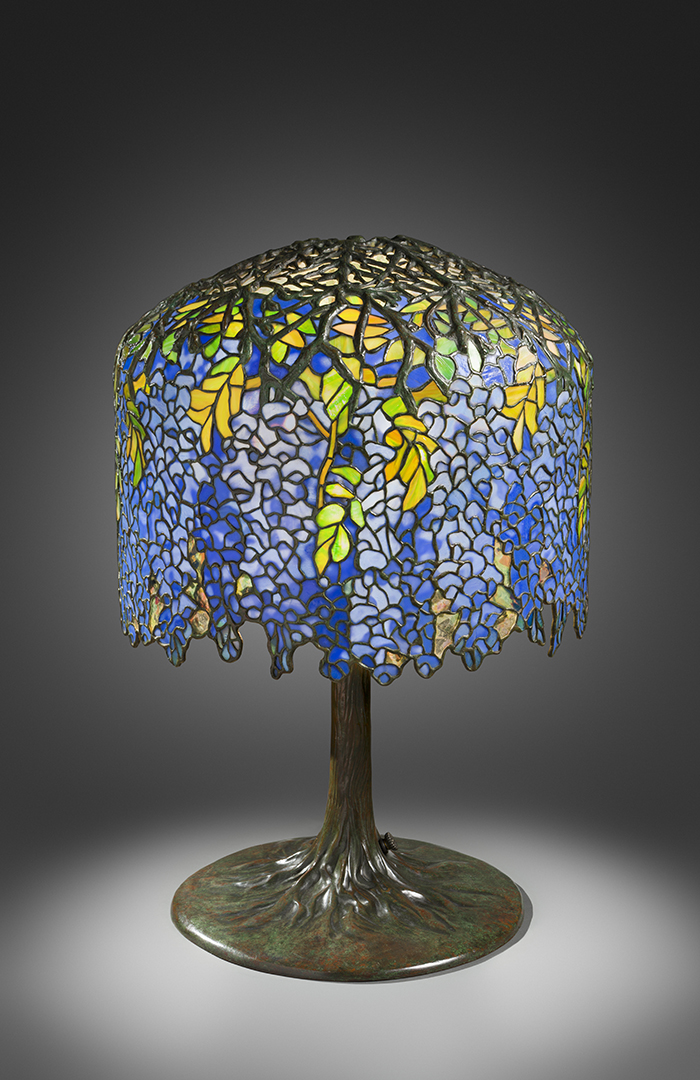
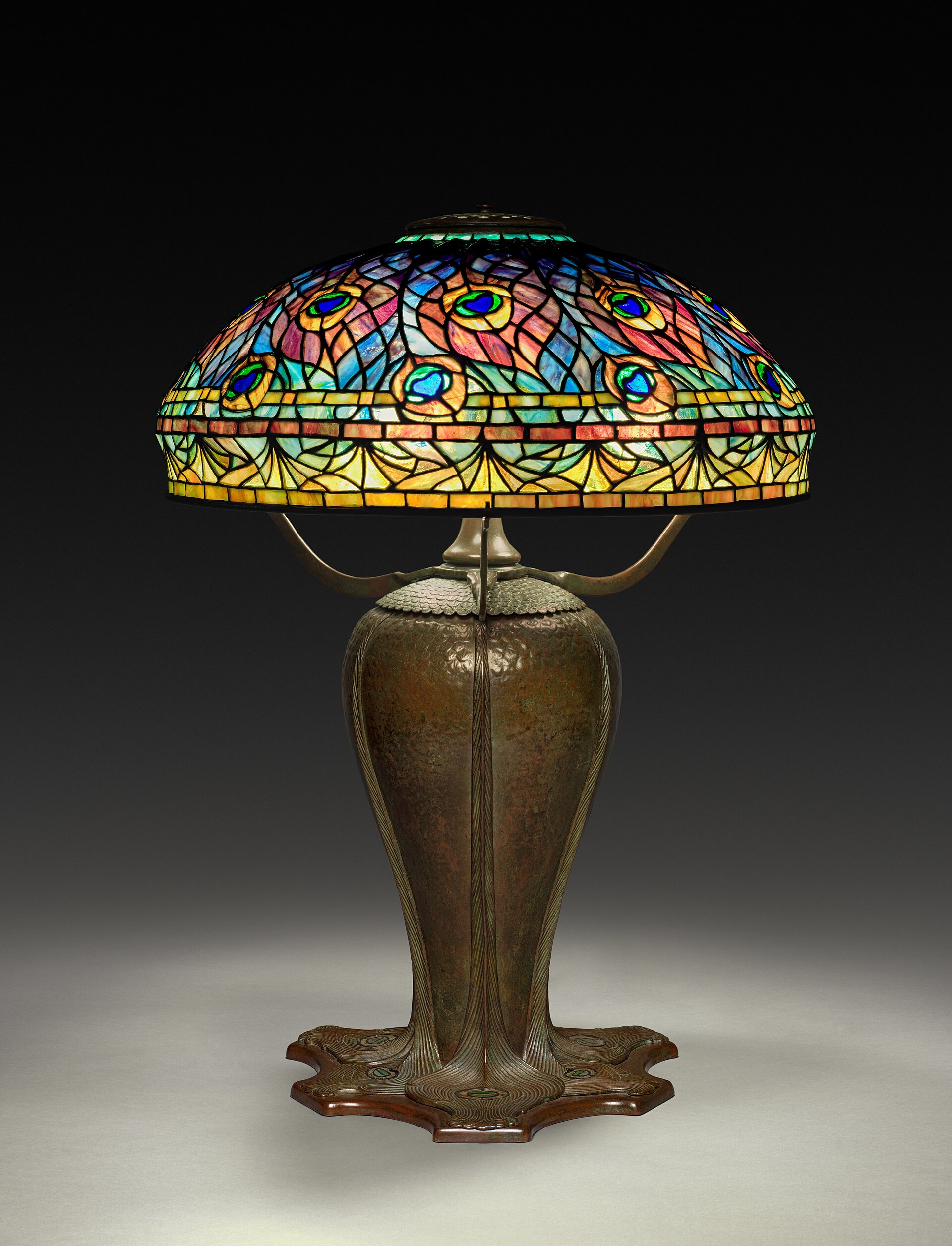
The letters do not contain a general claim of authorship. They contain design, in progress, dated. A letter of 29 June 1898 describes Driscoll making a model in paper and linen to show Tiffany, worked up from a memory of yellow butterflies over a field of wild primroses near her Ohio home; that is the Butterfly lamp being invented, on a specific day, by a named person. Another letter has her designing a daffodil shade during a lunch hour. Across the correspondence she describes conceiving the Dragonfly, the Wisteria, the Poppy, the Fern, the Peony, the Peacock and the Daffodil, among more than thirty shade designs now credited to her.
What that establishes is narrower and harder than the popular version of the story. It does not establish that Louis Comfort Tiffany designed nothing. He set the aesthetic, approved every design, developed the glass and owned the result. It establishes that the specific act of invention behind a named list of the firm's most valuable leaded shades was performed by Driscoll and her department, and that the firm's practice of publishing only Tiffany's name concealed this for a century.
Where does this lamp sit? Honestly: adjacent to the evidence rather than inside it. The Lotus is not among the models the published accounts of the letters name. The Toledo Museum of Art nonetheless catalogues its example with Driscoll as designer, and the inference is a reasonable one, because after 1903 her department held the exclusive right to design the firm's lampshades and this is a lampshade of about 1905. But an inference from a department's remit is a different class of evidence from a letter describing the thing being made, and a record that blurs the two is doing the same thing the old literature did, only in the other direction. Until a letter naming the Lotus is published, the correct formulation is that this lamp was designed within Driscoll's department, very probably by Driscoll, and certainly not by Louis Comfort Tiffany working alone.
Which lamp holds the record
The Pink Lotus held the Tiffany record for twenty-one years. Christie's New York offered it as lot 200 on the Friday of the week of 8 December 1997, against an estimate of 2.5 to 3.5 million dollars, and it made 2,807,500 dollars to an anonymous telephone bidder. That beat a previous Tiffany high of 1,102,500 dollars set about a year earlier and set a world auction record for any twentieth-century decorative arts object. The reported figure follows the auction-house convention of a total including buyer's premium; no source consulted publishes the hammer separately.
On 13 December 2018 Christie's New York sold a Pond Lily lamp of about 1903, lot 9, estimated at 1.8 to 2.5 million dollars, for 3,372,500 dollars including premium. Fewer than fourteen Pond Lily lamps are known and five are in museums. The same lamp had made 550,000 dollars at Christie's in 1989. One trade report describes the 3,372,500 figure as the hammer price; the auction record aggregators and the house's own release describe it as the total with premium, and the second reading is the correct one. The day before, Sotheby's New York had sold a Trumpet Creeper for 2,295,000 dollars with premium against an 800,000 to 1.2 million estimate.
The record now belongs elsewhere. On 11 December 2025 Sotheby's New York sold lot 209 of Dreaming in Glass: Masterworks by Tiffany Studios, featuring works from The Schur Family Collection, an important and rare Magnolia floor lamp of about 1910, for a reported 4.4 million dollars against an estimate of 2 to 3 million. It stands 75 3/4 inches high with a shade 28 1/4 inches across, its shade impressed TIFFANY STUDIOS NEW YORK and its base impressed TIFFANY STUDIOS NEW YORK 25886 together with the Tiffany Glass and Decorating Company monogram, and it was commissioned from the firm by Samuel Bowne Parsons Jr. of Flushing, New York, descending in his family until about 1978. Sotheby's attributes the design to Agnes Northrop, another of the women of the studio. Steve Jobs owned a Magnolia floor lamp, reportedly the only furniture in his living room, though it was a different example.
Two things follow. First, the Tiffany lamp record has been held for the last three decades by models designed, on current attribution, by women. Second, a lamp is not the Tiffany ceiling: a Northrop-designed Tiffany window made 12.4 million dollars at auction in 2024.
How a Tiffany lamp is authenticated
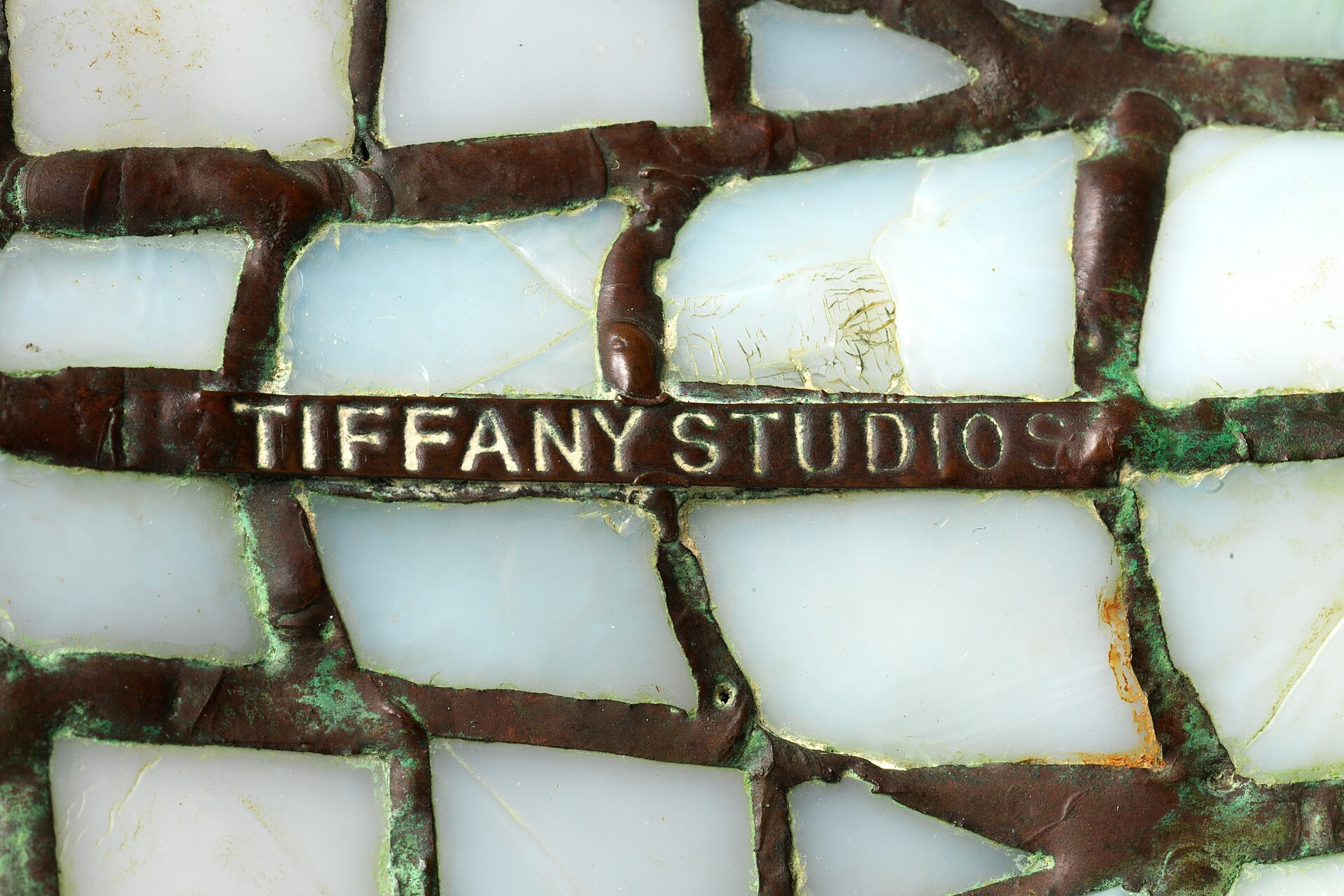
Start with the marks, and then stop trusting them. An authentic shade carries a die-stamped metal tag or ring at its lower edge reading TIFFANY STUDIOS NEW YORK, generally with a model number. An authentic base is stamped TIFFANY STUDIOS NEW YORK with a four- or five-digit inventory number, sometimes with the earlier Tiffany Glass and Decorating Company monogram alongside. The two catalogue records anchoring this page show the convention working: base 352 on the 1997 Lotus, base 25886 with the monogram on the 2025 Magnolia. The lettering is in capitals, struck rather than cast or engraved, and slightly uneven; the patina in the strike should match the patina around it.
That is precisely why marks cannot carry the decision. A stamp is the easiest feature of a lamp to imitate, and it can be added at any point in the object's life, including a century after the fact to a genuine period base of another maker. Authentication rests on the things that are expensive to fake. The shade is built by the copper-foil method Tiffany Studios developed instead of lead came: each cut piece wrapped in thin copper foil and soldered on a wooden mould, which gives a fine, organic seam rather than the heavy rigid line of came. The base is bronze with a heavy lead ring inside the hollow, so it is heavier than it looks; imitations use brass, zinc, white metal, wood or plastic. The glass is the real test. Tiffany glass is mottled, streaky, ripple-textured, and shot through with the tiny inclusions collectors call confetti; the colour is in the metal of the glass, not applied to the surface. Golden Tiffany glass reads as a translucent amber; imitation gold reads pale with a silvery cast. Glass that rattles when tapped has not been foiled properly.
The reference standard for the last of these is physical and is in Queens. The Neustadt Collection of Tiffany Glass holds an archive of original Tiffany flat glass and pressed jewels, described by the organisation as nearly half a million pieces and in one published account as more than a quarter of a million. It is what Tiffany glass looked like, in quantity, available to be compared against.
The reproduction problem is not a footnote
Two distinct things get called fakes and they need separating. The first is the open reproduction. Tiffany-style leaded lamps have been a mass-market product since the 1970s, made in China, India and Vietnam, with the glass cut on industrial water-jet machines to standardised patterns and hand-assembled in factories, and sold under names that make no claim to be Tiffany Studios. A 28-inch Lotus of exactly the design described on this page, with the mosaic base and the eight hanging globes, can be commissioned new today from a workshop in Essen, Germany, wired to United States electrical standards. Nothing about that is deceptive.
The second is the object built or doctored to be sold as period. It is the reason Tiffany is among the most heavily forged names in the decorative arts, and the reason the marks discussion above matters. The two categories converge over time in the worst way: an honest reproduction acquires an owner who does not know what it is, then a dealer who suspects, then a stamp. A lamp of this model in particular attracts the effort, because the design is famous, the auction figures are public, and only three period examples are reported to exist.
The operative rule for this design is therefore blunt. A Lotus lamp with no institutional or auction-house history is a reproduction until proved otherwise, and the burden sits with the object.
Where the lamps are
The single most useful place to stand is the New-York Historical Society's gallery of Tiffany lamps, where about a hundred lit lamps are shown together. They arrived from one man. Dr Egon Neustadt (1898-1984), an Austrian immigrant, Queens orthodontist and property developer, bought his first Tiffany lamp with his wife Hildegard in 1935, a Daffodil from a second-hand shop in Greenwich Village, for 12.50 dollars, at a moment when the taste had collapsed so completely that dealers were breaking lamps for the lead. Over five decades he assembled more than two hundred. He published The Lamps of Tiffany in 1970, which set the four-part classification of shade types that collectors still use. He showed around 130 lamps at the New-York Historical Society in 1983 and gave 132 lamps and three windows to the institution; the gift is generally dated 1984, the year of his death.
What he did not give became The Neustadt Collection of Tiffany Glass, which has held a gallery at the Queens Museum since 1995, close to where the Corona works stood, and keeps its archive and conservation facility in Long Island City. Between the two institutions and the Cleveland Museum of Art, the Morse Museum in Winter Park, the Virginia Museum of Fine Arts and the Corning Museum of Glass, the material is unusually well distributed and unusually well published for a body of work that was, within living memory, being smashed for scrap.
The Lotus itself is the exception. Two of the three are unlocatable in public sources and the third is off view. For an object that once sat at the top of a famous firm's price list and held a world record for a quarter of a century, that is a thin public record, and it is the gap this page exists to mark.
Technical evidence
- Shade
- Leaded Favrile glass, about 28 in. (71 cm) in diameter, wide and undulating with an irregular lower border rather than a closed rim; all-over pattern of lotus blossoms, seed pods and leafage at varying stages of bloom, in mottled rose, cranberry, orange, lavender, streaky white with blue, emerald green and lemon yellow.13
- Hanging elements
- Chased patinated bronze branches worked to resemble vines, carrying two rows of fittings. The upper row has eight sockets holding blown Favrile shades: pearly opalescent with mint-green striated feathering edged in amber iridescence on the Toledo example, and globes reading as pink lotus flowers on the example sold in 1997. The Toledo example's lower four branches have bare sockets.13
- Base
- Glass mosaic over bronze, the green tesserae laid out as a single large spreading lotus leaf, continuing into a slender cylindrical stand that carries the electrical cord.13
- Construction
- Copper-foil method rather than lead came: each cut glass piece wrapped in thin copper foil and soldered together over a wooden mould, from a numbered metal template made off a hand-coloured pattern. Tiffany Studios developed and patented the method; the patent lapsed in 1903 and competitors followed.16
- Dimensions
- Toledo Museum of Art example, overall 87.6 x 71.1 x 71.1 cm (34 1/2 x 28 x 28 in.). The example sold at Christie's in 1997 is recorded at 34 3/4 in. high, shade 28 in. in diameter.13
- Marks
- The 1997 example has a base impressed TIFFANY STUDIOS NEW YORK 352. The Toledo Museum of Art online record does not list marks for its example. Tiffany Studios convention is a die-stamped shade tag reading TIFFANY STUDIOS NEW YORK with a model number and a base stamped with the same wording and a four- or five-digit inventory number.137
- Retail price when new
- 750 dollars in 1906, stated by the Toledo Museum of Art to be the most expensive lamp Tiffany Studios sold. A Wisteria table lamp of the same period is given as 400 dollars in 1906 in one account and 250 dollars in another.21415
- Labour
- The Toledo Museum of Art states the lamp was made by more than a dozen designers, glass selectors, cutters and glaziers. Under the 1903 settlement with the glaziers' union, the women of the Glass Cutting Department designed and cut the shade glass and men assembled the lamps at the Corona works in Queens.222
- Examples known
- Three reported: Toledo Museum of Art 2022.28A-J; the pink example sold at Christie's New York in December 1997; a red example from the Maurice and Margo Cohen Collection sold at Christie's New York in November 1999.123
- Authentication
- Marks first, then the things that are expensive to fake. Shade tag die-stamped TIFFANY STUDIOS NEW YORK, usually with a model number; base stamped with the same wording and a four- or five-digit inventory number, sometimes with the earlier Tiffany Glass and Decorating Company monogram. Capitals, struck rather than cast or engraved, slightly uneven, with the patina in the strike matching the patina around it. Marks alone decide nothing: they are the cheapest feature to imitate and can be added at any point in an object's life. The load-bearing tests are the copper-foil seam rather than lead came, the heavy lead ring inside a hollow bronze base, and Tiffany glass itself - mottled, streaky, rippled, with confetti inclusions and colour in the metal of the glass rather than on its surface, golden glass reading translucent amber rather than pale with a silvery cast.371823
- Reproductions
- Two categories. Open reproductions have been a mass-market product since the 1970s, made in China, India and Vietnam with glass water-jet cut to standardised patterns and hand-assembled; this exact 28-inch Lotus, mosaic base and eight hanging globes included, can be commissioned new from a workshop in Essen, Germany, wired to United States standards. Deceptive fakes are the separate problem, and the two categories converge over time as an honest reproduction loses its history and acquires a stamp. A Lotus with no institutional or auction-house history should be treated as a reproduction until proved otherwise.1819
Provenance
- c. 1905 -Tiffany Studios, New Yorkdocumented
Made at the Tiffany works at Corona, Queens. The shade was designed and its glass selected and cut in the Women's Glass Cutting Department, which after the 1903 union settlement held the exclusive right to design the firm's lampshades; the lamps were assembled by men at the Queens works. Offered at 750 dollars in 1906, the highest price in the firm's lamp range. Toledo dates its example about 1905; the model is generally given as c. 1900-1910.121322
- - 1997Unknownunknown
No owner is published for the pink example between manufacture and its appearance at Christie's New York in December 1997. Tiffany Studios' records were destroyed after the firm closed, so no original purchaser can be recovered from the maker's side.3411
- 1997 - presentAnonymous private collectiondocumented
The pink example, base impressed TIFFANY STUDIOS NEW YORK 352, sold at Christie's New York as lot 200 in December 1997 for 2,807,500 dollars to a telephone bidder who wished to remain anonymous. No subsequent owner, loan or exhibition has been published in the sources consulted.34
- - 1999Maurice and Margo Cohen, Detroitdocumented
A red example of the model was in the Cohen collection and was sold at Christie's New York in November 1999. This is recorded in the Toledo Museum of Art's comparative references for its own Lotus lamp. Earlier owners, the sale figures and the buyer are not published in the sources consulted.1
- 1999 - presentUnknownunknown
No owner is published for the red Cohen example after the November 1999 Christie's sale.1
- - 2022Unknownunknown
The Toledo Museum of Art example has no published prior ownership. The museum's online record gives only the funding credit line, not a vendor or a chain.1
- 2022 - presentToledo Museum of Art, Toledo, Ohiodocumented
Accession 2022.28A-J. Purchased with funds from the Libbey Endowment, gift of Edward Drummond Libbey, by exchange, and with funds provided by the James F. White, Jr. Family in memory of Susan Serrott White. Announced in March 2023. Recorded as not on view. Price paid not published.12
Prices realised
| Date | Sale | Estimate | Result | Note |
|---|---|---|---|---|
| 1997-12-12 | Christie's New York | USD 2,500,000 - 3,500,000 | Hammer Not published With premium USD 2,807,500 total as reported USD | THIS MODEL. Lot 200, twentieth-century decorative arts sale. Sold to an anonymous telephone bidder. A world auction record for any twentieth-century decorative arts object at the time, beating a previous Tiffany high of 1,102,500 dollars set about a year earlier. Reported figures follow the auction-house convention of a total including buyer's premium; no source consulted separates the hammer. Date: contemporary reports describe the sale as taking place on the Friday, which was 12 December 1997; one account prints 13 December. Christie's own sale record has not been consulted. |
| 1999-11 | Christie's New York | Not published | Hammer Not published With premium Not published USD | THIS MODEL, red colourway, from the collection of Maurice and Margo Cohen. Recorded in the Toledo Museum of Art's comparative references for its Lotus lamp. Day of month, lot number and figures are not published in the sources consulted and should be obtained from the Christie's sale record. |
| 2025-12-11 | Sotheby's New York | USD 2,000,000 - 3,000,000 | Hammer Not published With premium USD 4,400,000 as reported USD | NOT this model. Recorded because it is the current auction record for a Tiffany Studios leaded lamp. Lot 209, an important and rare Magnolia floor lamp, about 1910, design attributed to Agnes Northrop, from the sale Dreaming in Glass: Masterworks by Tiffany Studios, featuring works from The Schur Family Collection. Sold after about ten minutes of bidding. Sources report a single rounded figure and none separates hammer from premium; the public Sotheby's lot page does not display the result without a login. The Sotheby's page as machine-read returned a sale date of 11 December 2024, which conflicts with the sale year in its own URL and with press reporting of 11 December 2025; the 2025 date is followed here. |
| 2018-12-13 | Christie's New York | USD 1,800,000 - 2,500,000 | Hammer Not published separately With premium USD 3,372,500 including buyer's premium USD | NOT this model. Recorded because it held the Tiffany auction record between 2018 and 2025 and because it displaced the Pink Lotus. Lot 9, a Pond Lily lamp of about 1903; fewer than fourteen known, five in museums. The same lamp made 550,000 dollars at Christie's in 1989. One trade report presents 3,372,500 as the hammer price; the aggregated auction records and the house release present it as the total including premium, and the latter is followed here. Reported as breaking the 1997 Pink Lotus record of 2.8 million dollars. |
| 2018-12-12 | Sotheby's New York | USD 800,000 - 1,200,000 | Hammer Not published separately With premium USD 2,295,000 including buyer's premium USD | NOT this model. Lot 327, a Trumpet Creeper lamp, sold the day before the Pond Lily. Recorded for market context. |
| 2005-12-06 | Christie's New York | USD 900,000 - 1,200,000 | Hammer Not published separately With premium USD 2,032,000 including buyer's premium USD | NOT this model. Lot 319, a Magnolia floor lamp. Recorded for market context and because the Magnolia model later took the record. |
Related works
| Work | Relation | Where it is |
|---|---|---|
| Lotus Lamp Tiffany Studios; designer credited as Clara Pierce Wolcott Driscoll | Same model. The only example in a public collection About 1905. Acquired 2022, announced March 2023, recorded as not on view. Toledo's own comparative references cite the 1997 and 1999 Christie's Lotus lamps as separate objects. | Toledo Museum of Art, Toledo, Ohio, acc. 2022.28A-J |
| Red Lotus lamp Tiffany Studios | Same model, different colourway From the collection of Maurice and Margo Cohen, sold at Christie's New York, November 1999. Figures not published in the sources consulted. | Unlocated after November 1999 |
| Lotus, Pagoda lamp Tiffany Studios | NOT this model. A separate Tiffany lotus design routinely confused with it Also distinct from the Lotus Bell, a small accordion-pleated bell shade that is a junior version of the 25-inch Mandarin Lotus. Three different Tiffany models carry lotus in their names and the trade conflates all three. | Metropolitan Museum of Art, New York |
| Magnolia floor lamp Tiffany Studios; design attributed to Agnes Northrop | Current auction record holder for a Tiffany Studios leaded lamp About 1910, lot 209, reported at 4.4 million dollars against a 2 to 3 million estimate. Commissioned from the firm by Samuel Bowne Parsons Jr. of Flushing, New York. | Private collection, sold Sotheby's New York 11 December 2025 |
| Pond Lily lamp Tiffany Studios | Held the auction record between 2018 and 2025 About 1903, lot 9, 3,372,500 dollars with premium. Fewer than fourteen known, five of them in museums. The same lamp made 550,000 dollars at Christie's in 1989. | Private collection, sold Christie's New York 13 December 2018 |
| Wisteria table lamp Tiffany Studios; designed by Clara Driscoll | The best-documented Driscoll model, named in her letters About 1902-05. Roughly 2,000 individually cut Favrile pieces. The contrast with the Lotus is the point: the Wisteria attribution rests on correspondence, the Lotus attribution rests on a department's remit. | Crystal Bridges Museum of American Art, Bentonville, Arkansas, among many other collections |
| Dragonfly lamp Tiffany Studios; designed by Clara Driscoll | The one design for which Driscoll was publicly credited in her lifetime Won a bronze medal at the Paris Exposition Universelle of 1900, where exhibitors were required to name the individuals responsible for the work. | Dayton Art Institute and many other collections |
Open questions
- Do the Driscoll letters name the Lotus lamp anywhere? No published account consulted here lists it among the models she describes designing, yet the Toledo Museum of Art credits her as designer. The basis for that credit line needs to be obtained from the museum's curatorial file.
- Is the Toledo example a third distinct object, or is it the 1997 or 1999 Christie's lamp resurfacing? Toledo's comparative references cite both sales, which implies it is distinct, but no prior provenance for the Toledo lamp has been published.
- Where is the pink example sold at Christie's in December 1997? The buyer was an anonymous telephone bidder and no subsequent owner, loan or exhibition is recorded.
- What did the Toledo Museum of Art pay in 2022, and from whom? Neither figure nor vendor is published.
- What were the hammer prices, as distinct from the premium-inclusive totals, at Christie's in 1997 and at Sotheby's in December 2025? Neither house's published figure separates them.
- Are only three examples of this model known, or only three currently traced? The claim rests on the Toledo Museum of Art's statement, and the firm's own production records no longer exist to test it against.
- Was the Lotus ever offered under the name Lotus Bell in period Tiffany Studios material, or is the conflation entirely a modern trade habit? The two are distinct designs and the crossover needs checking against a period price list.
- Which individual women of the Glass Cutting Department selected and cut the glass for each of the three examples? Toledo states more than a dozen people were involved, and the letters name many of Driscoll's colleagues, but no example has been tied to named hands.
Sources
- 1Toledo Museum of Art, online collection record, 'Lotus Lamp', Tiffany Studios (manufacturer) and Clara Pierce Wolcott Driscoll (designer), about 1905, object number 2022.28A-J. Read directly from the museum's eMuseum on 2 August 2026 for the tombstone, dimensions, credit line and full physical description. The record's collapsed Label Text, Published References and Comparative References panels could not be expanded; their contents, including the citation of the 1997 and 1999 Christie's Lotus lamps, are reported here from search indexing of the same page and should be confirmed against the page itself.
https://emuseum.toledomuseum.org/objects/81596/lotus-lamp - 2Toledo Museum of Art, news release, 'Toledo Museum of Art Adds Iconic Tiffany Lamp to its Collection', March 2023. Source of the statements that the lamp was Tiffany Studios' most expensive, retailing at 750 dollars in 1906, that more than a dozen people worked on it, and that only three are currently known. NOTE: this page returned HTTP 403 to direct fetch; its content is reported here from search indexing of the museum's own release and should be confirmed.
https://toledomuseum.org/news/toledo-museum-of-art-adds-iconic-tiffany-lamp-to-its-collection - 3leadedlamps.com, catalogue description of the Tiffany Studios Lotus lamp sold at Christie's in December 1997, giving the shade description, the eight suspended Favrile globes, the mosaic lotus-leaf base, dimensions of 34 3/4 by 28 in., the base mark TIFFANY STUDIOS NEW YORK 352 and the price of 2,807,500 dollars. Trade source; flagged for replacement with the Christie's catalogue entry.
https://www.leadedlamps.com/pinklotus.html - 4Deseret News, 'Lamp sells for $2.8 million, breaking Christie's record', filed 13 December 1997. Gives the price of 2,807,500 dollars, the estimate of 2.5 to 3.5 million, the anonymous telephone bidder, the previous Tiffany record of 1,102,500 dollars and the world record for twentieth-century decorative arts.
https://www.deseret.com/1997/12/13/19351280/lamp-sells-for-2-8-million-breaking-christie-s-record/ - 5Antiques and The Arts Weekly, 'Christie's Sets Tiffany Studios World Auction Record: $3,372,500'. Reports the Pond Lily sale of 13 December 2018, the previous 1997 Pink Lotus record of 2.8 million dollars and the lamp's own 1989 Christie's result. This report labels 3,372,500 as a hammer price, which conflicts with the premium-inclusive reading given elsewhere.
https://www.antiquesandthearts.com/christies-sets-tiffany-studios-world-auction-record-3372500/ - 6Philip Chasen Antiques, 'A review of the most expensive Tiffany Studios lamps ever sold at public auction', 3 May 2021. Gives lot numbers, dates, estimates and premium-inclusive totals for the 2018 Pond Lily (Christie's lot 9), the 2018 Trumpet Creeper (Sotheby's lot 327) and the 2005 Magnolia floor lamp (Christie's lot 319). Dealer source; useful because it states explicitly which figures include the premium.
https://blog.chasenantiques.com/2021/05/03/a-review-of-the-most-expensive-tiffany-studios-lamps-ever-sold-at-public-auction/ - 7Sotheby's, lot 209, 'An Important and Rare Magnolia Floor Lamp', from Dreaming in Glass: Masterworks by Tiffany Studios, featuring works from The Schur Family Collection. Gives the estimate of 2 to 3 million dollars, dimensions, the shade and base marks including base 25886 and the Tiffany Glass and Decorating Company monogram, the Northrop attribution and the Parsons provenance. The realised price is not shown without a login.
https://www.sothebys.com/en/buy/auction/2025/dreaming-in-glass-masterworks-by-tiffany-studios/an-important-and-rare-magnolia-floor-lamp - 8Antique Trader, 'Tiffany Leaded Lamp Lights Up Auction with New Record'. Gives the sale date of 11 December 2025, the house, the sale title, the reported 4.4 million dollar result, the ten-minute bidding and the Northrop attribution described as believed rather than settled.
https://www.antiquetrader.com/tiffany-leaded-lamp-lights-up-auction-with-new-record - 9Semafor, 'Tiffany lamp coveted by Steve Jobs sells for $4.4 million', 16 December 2025. Confirms the record, the Northrop credit, that Jobs owned a Magnolia floor lamp rather than this one, and that a Northrop-designed Tiffany window made 12.4 million dollars at auction the previous year.
https://www.semafor.com/article/12/16/2025/tiffany-lamp-coveted-by-steve-jobs-sells-for-44-million - 10Wikipedia, 'Clara Driscoll (glass designer)', for the dates, the marriage bar, the discovery of the letters at the Queens Historical Society, the list of lamps credited to her, and the 2006-07 New-York Historical Society exhibition and its catalogue. TERTIARY. Flagged for replacement with Eidelberg, Gray and Hofer, A New Light on Tiffany: Clara Driscoll and the Tiffany Girls (New-York Historical Society, 2007).
https://en.wikipedia.org/wiki/Clara_Driscoll_(glass_designer) - 11The American Ceramic Society, 'Clara Driscoll and the Tiffany Girls'. Source for the letter of 29 June 1898 on the Butterfly lamp, the department growing from six to thirty-five and being capped at twenty-seven in 1903, the union threat, and the point that Tiffany Studios' records do not survive.
https://ceramics.org/ceramic-tech-today/clara-driscoll-and-the-tiffany-girls/ - 12PBS, Antiques Roadshow, 'Who Were the Tiffany Girls?'. Source for the two archives, Queens Historical Society and Kent State University Library, the marriage rule, the 1903 outcome leaving Driscoll the right to design all lampshades and luxury goods, and the department's growth.
https://www.pbs.org/wgbh/roadshow/articles/who-were-the-tiffany-girls/ - 13Cleveland Museum of Art, 'The Women of Tiffany Studios: Clara Wolcott Driscoll Made Visible'. Source for the department of thirty-five, the 1900 world's fair prize, the 1903 compromise capping the women at twenty-seven and restricting them to lampshades and small luxury goods, and the point that before the letters the women's contribution was invisible.
https://www.clevelandart.org/articles/women-tiffany-studios-clara-wolcott-driscoll-made-visible - 14National Gallery of Victoria, 'Tiffany Studio: Clara Driscoll'. Source for the Women's Glass Cutting Department founded 1892 and running to fifty women, the division of floral work to women and geometric to men, the salary of 1,820 dollars a year against the 1904 newspaper claim, the destruction of the studio records, and the Wisteria at 2,000 pieces and 400 dollars in 1906.
https://www.ngv.vic.gov.au/essay/tiffany-studio-clara-driscoll/ - 15Macklowe Gallery, 'Uncovering the History of the Tiffany Girls'. Source for the independent discoveries by Gray at the Queens Historical Society and Eidelberg at Kent State, the claim that Driscoll was publicly credited only once in her career, and the Wisteria at 250 dollars. DEALER SOURCE; the price and salary figures here conflict with the museum sources and are recorded as a conflict, not adopted.
https://www.macklowegallery.com/blogs/designer-spotlights/uncovering-the-history-of-the-tiffany-girls - 16Wikipedia, 'Tiffany lamp', for the copper-foil method and the pattern-to-template-to-mould sequence, the patent lapsing in 1903, the Neustadt shade classification, the 1930s collapse in taste, and the auction chronology. TERTIARY. Flagged for replacement with Neustadt, The Lamps of Tiffany (1970) and Duncan, Tiffany Lamps and Metalware (2019).
https://en.wikipedia.org/wiki/Tiffany_lamp - 17Wikipedia, 'Louis Comfort Tiffany', for his dates, training, the succession of company names, the Favrile trademark of 13 November 1894, the Corona workforce, the 1900 Paris disclosure of individual names, Laurelton Hall and the 1932 bankruptcy. TERTIARY. Note that this source dates the Tiffany Studios name to 1900 while the Toledo Museum of Art gives the firm as 1902-1932.
https://en.wikipedia.org/wiki/Louis_Comfort_Tiffany - 18Antique Trader, 'Tiffany lamps: How to tell real from fake'. Source for the lead ring inside the hollow bronze base, the patina test, confetti glass and the amber versus silvery gold test, the rattle test, colour being in the glass rather than applied, and modern mass production in China, India and Vietnam using water-jet cutting.
https://www.antiquetrader.com/antiques/tiffany-lamps-how-to-tell-real-from-fake - 19Grotepass, tiffany-lamps.de, '28in Lotus'. A German workshop in Essen offering a made-to-order 28-inch Pink Lotus with mosaic base, eight glass shades and four extra lamps, wired to United States safety standards. Cited as evidence that this exact design is openly reproduced today, not as a source on the period object.
https://www.tiffany-lamps.de/TIFFANY_LAMPS/28IN_LOTUS/A.html - 20The Neustadt Collection of Tiffany Glass, institutional website. Source for the archive of Tiffany flat glass and jewels described as nearly half a million pieces, the gallery at the Queens Museum and the archive and conservation facility in Long Island City.
https://www.theneustadt.org/ - 21Journal of Antiques and Collectibles, 'The Neustadt Collection of Tiffany Lamps', April 2017. Source for Egon Neustadt's dates of 1898-1984, the first Daffodil bought in 1935 in Greenwich Village, more than 200 lamps assembled over fifty years, the 1970 book The Lamps of Tiffany, the display of around 130 lamps at the New-York Historical Society in 1983, and a flat glass archive given as more than a quarter of a million pieces.
https://journalofantiques.com/columns/great-collections-april-2017/ - 22More Time To Travel, 'The Magnificent Tiffany Lamps at The New-York Historical Society'. Source for the 1984 gift of 132 lamps and three Tiffany windows, the 12.50 dollar Daffodil of 1935, the description of the gallery as the largest lit collection of Tiffany lamps on display anywhere, and the gallery's own statement that the women worked in Manhattan while men assembled the lamps in Queens. TRAVEL BLOG; the numbers are corroborated by sources 16 and 21 and the interpretive statements are not load-bearing here.
https://www.moretimetotravel.com/tiffany-lamps-at-the-new-york-historical-society/ - 23Fontaine's Auction Gallery, 'How to Spot an Authentic Tiffany Studios Lamp'. Surfaced in search as the source for the shade-ring-with-model-number and base-with-inventory-number conventions, for the all-capitals die-struck lettering and for the warning that marks are added to imitations both during and after production. NOT FETCHED: the page returned HTTP 403. No claim in this record rests on it alone; the marks conventions stated here are taken from the two catalogue records at sources 3 and 7.
https://www.fontainesauction.com/how-to-spot-authentic-tiffany-studios-lamps/
Change log
2026-08-02 — Record created at the house standard: researched narrative, technical evidence, maker dossier, graded provenance chain, prices with hammer and premium separated, related works, open questions and sources. OBJECT IDENTITY. The brief named the object as the Pink Lotus lamp 'also called the Lotus Bell'. That equation is wrong and has been corrected in the record. The Lotus Bell is a separate, much smaller Tiffany model: an accordion-pleated bell shade, a junior version of the 25-inch Mandarin Lotus, with applied wirework on the pleats. A third model, the Lotus Pagoda, is also routinely confused with b