Viola by Antonio Stradivari, Cremona, 1690, Fulton, ex-Baird, Tuscan-Medici
- Artist
- Antonio Stradivari
- Date
- 1690
- Medium
- Spruce top; two-piece back, ribs and scroll of quarter-cut maple; oil varnish over gesso ground
- Dimensions
- Length of back 41.4 cm; upper bouts 18.7 cm; middle bouts 13.1 cm; lower bouts 24.3 cm; back arching rises to 19.5 mm, top arching to 18.7 mm. A contralto (alto-register) viola.
- Inscriptions
- Inside the top, treble upper bout, in pen: 'The Medici Stradivari / A.H. June 1913', left by Alfred Hill. Original Stradivari label retained inside the instrument; its exact wording was not published in the sources consulted.
- Attribution
- acceptedAccepted as an autograph Stradivari on the basis of a retained original label, an interior inscription left by Alfred Hill of W. E. Hill and Sons in June 1913 identifying it as the Medici viola, a written certificate of authenticity issued by W. E. Hill and Sons on 2 February 1957, and the Library of Congress's own organological study, which found high barrel-form arching and top-wood dendrochronology consistent with Stradivari's output of the 1690s. No modern connoisseurship dispute over the attribution was found in the sources consulted.
- Where it is now
- Library of Congress, Music Division, Washington DC, Library of Congress Control Number 2023870693; catalog item ihas.200154817
- Object type
- Musical instrument
- Period
- Italian, seventeenth century, Cremonese school
A contralto viola built by Antonio Stradivari in Cremona in 1690 for the Florentine court of Ferdinando de' Medici, one half of a matched pair of violas that was split up by the late eighteenth century, its tenor sibling staying in Florence while this one crossed to England, then to New York, then through the hands of a department-store heir whose father died on the Titanic, and finally to a Buffalo music professor whose 1957 authentication certificate from W. E. Hill and Sons remains its clearest formal proof of authorship.
It reached the Library of Congress in 1977, not as a gift but as a private loan from the professor's widow, and stayed a loan, played annually in the Library's own Stradivari memorial concert and the subject of a Grammy-winning concerto, for forty-eight years. Only in April 2025 did a 30 million dollar gift, split between a Seattle collecting couple and the original owning family, convert the loan into outright ownership and give the instrument its present name: the Fulton, ex-Baird, Tuscan-Medici.
No forgery dispute and no theft attaches to this instrument. Its real complication is custodial: for nearly half a century, one of the instruments the public associated with the Library of Congress did not actually belong to it.
Images
The artist
Antonio Stradivari
Antonio Stradivari worked in Cremona for roughly seven decades and left no treatise explaining his methods; almost everything known about his working practice is reconstructed from the surviving instruments themselves; through dendrochronology, arching measurement, varnish analysis and connoisseurship built up over more than a century, the same kind of evidence that authenticates this viola. Around six hundred and fifty of his instruments are thought to survive out of a much larger original output, and only a small number of violas are among them, which is part of why this instrument's condition and paper trail matter.
What it is
A contralto viola, 41.4 cm at the back, built by Antonio Stradivari in Cremona in 1690. It carries a spruce top and a two-piece maple back with matching ribs and scroll, under an oil varnish, and its arching is high and barrel-shaped, a form Stradivari was using in this exact decade before he lengthened and narrowed his instruments in the pattern changes of the following ten years.
It is one of a very small surviving group. Sources consulted give two different counts for that group: the Library of Congress and the Cozio Archive both describe it as one of roughly ten surviving Stradivari violas, while a 2017 report on the Library's own collection put the number at around a dozen. Both figures come from named, citable sources, and this record has not been able to reconcile them; the discrepancy is left as a finding rather than resolved by guesswork.
A gift for the grand prince
The viola was made as part of what later became known as the Medici quintet: two violins, a cello, and eventually two violas, a tenor and this contralto. The commission is associated with Bartolomeo Ariberti, a nobleman of Cremona, and with Ferdinando de' Medici, Grand Prince of Tuscany, the eldest son of Grand Duke Cosimo III and the family's principal patron of music, sometimes called in his own lifetime the Orpheus of princes.
Ferdinando's patronage had a second, more famous consequence. In 1688, two years before this viola was made, he hired the harpsichord maker Bartolomeo Cristofori as keeper of his musical instruments; Cristofori built the first pianoforte for Ferdinando around 1700. The Medici Stradivaris and the invention of the piano both trace back to the same court and the same patron, though this record makes no claim of any direct link beyond that shared origin.
An older cataloging tradition, reflected in the title of W. E. Hill and Sons' 1891 monograph on the sibling violin, names the recipient as Cosimo de' Medici, Grand Duke of Tuscany, rather than his son Ferdinando. This record follows the more specific and more recent sourcing, which credits Ferdinando as the musical patron of the commission, and notes the older attribution as a labeling variant rather than a competing claim.
The quintet comes apart
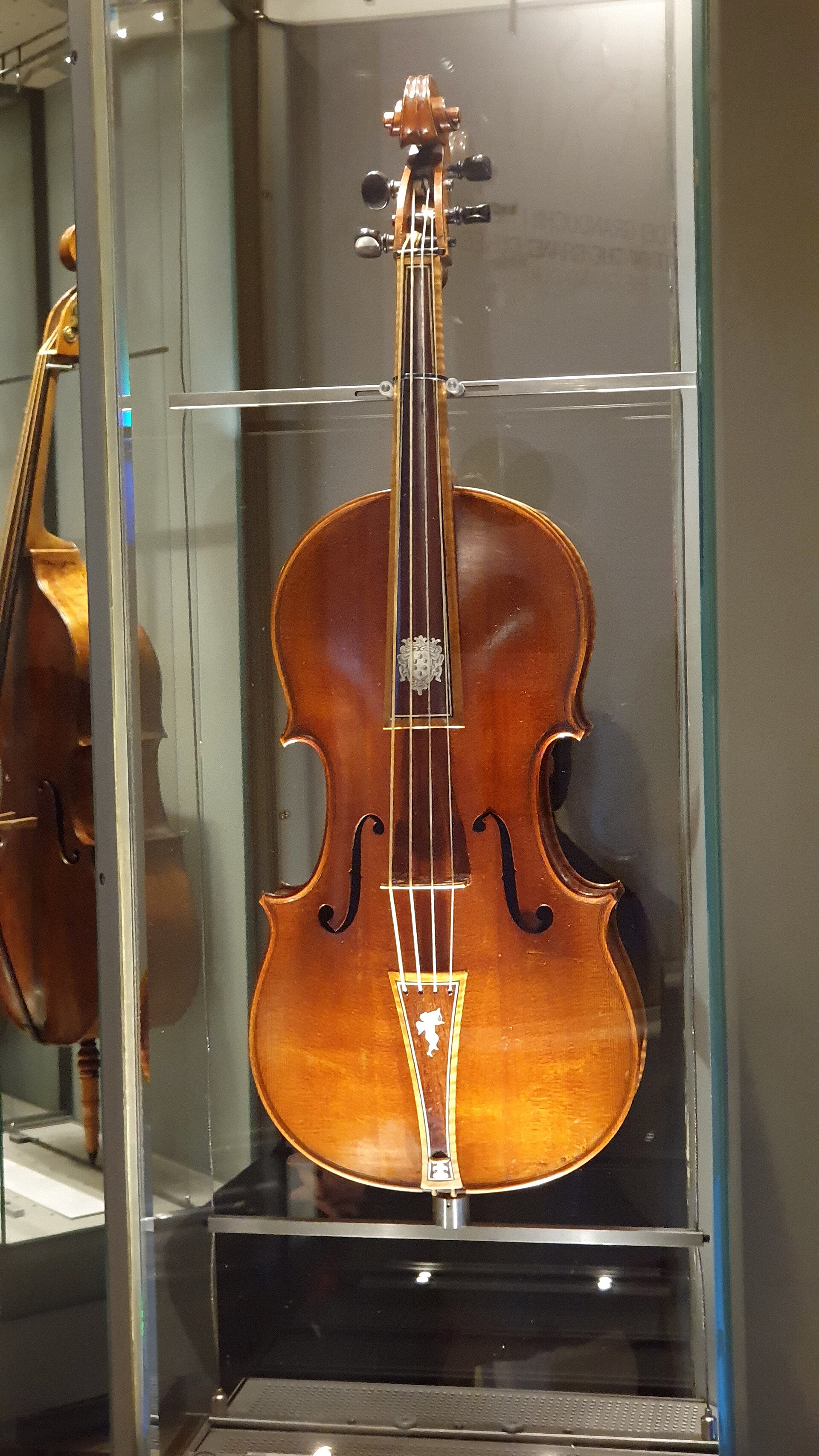
The instruments did not stay together. The set was broken up at an unrecorded date, and the two violas were separated from each other by the late eighteenth century: the tenor viola remained in Florence and is now held by the city's Galleria dell'Accademia, through the Conservatorio Luigi Cherubini, while this contralto viola left Italy.
According to W. E. Hill and Sons' 1902 monograph on the group, the contralto arrived in England with the last descendant of the noble Gianfigliazzi family of Florence, and in 1803 it was sold to an Englishman resident there. The next hundred years took it through France and back to England before it crossed the Atlantic.
A private English chain
The nineteenth-century ownership record, reconstructed from the Betts notebook and preserved in the Cozio Archive, runs from Bright and Jones to Alexander Glennie, then to Glennie's son-in-law F. F. de Rougemont, then to Avery Tyrell, who inherited it from his father Edward. None of these transfers carries a firm date in the sources consulted, and this record does not invent one; the chain is treated as documented in sequence but undated in detail.
W. E. Hill and Sons acquired the viola from the Tyrell heirs in 1913. Alfred Hill inscribed the inside of the top in pen that June, identifying it as the Medici Stradivari, and the firm judged it, in its own words, one of the finest of the ten existing examples of Stradivari's viola work, its preservation as remarkable as the beauty of its appearance. The Hills sold it to the collector Richard Bennett in 1913 or 1914, later reacquired it, and sold it again through the Rudolph Wurlitzer Company of New York.
A Straus, and a family already marked
The Wurlitzer firm sold the viola to Herbert N. Straus. The Library of Congress's own account dates the sale to 1925; other sources consulted, following the Wurlitzer and Hill chain, place it in 1924. This record carries both dates rather than choosing between them.
Straus was an amateur musician and a son of Isidor and Ida Straus, co-owners of R. H. Macy and Company. Isidor Straus died aboard the Titanic on 15 April 1912, thirteen years before his son's name enters this instrument's record. Herbert Straus's own motive for the purchase is not established in the sources consulted; it has been described as completing a personal collection of Cremonese instruments, without further detail.
Cameron Baird's certificate
Cameron Baird, a violist who founded and chaired the music department at the State University of New York at Buffalo, bought the viola from the Straus estate in 1957. On 2 February 1957, W. E. Hill and Sons issued a written certificate confirming Stradivari's authorship, the clearest single point of formal authentication this instrument carries.
During Baird's ownership the viola did not sit idle. It was loaned for worldwide performance to Boris Kroyt of the Budapest String Quartet, and Kroyt's quartet colleague Alexander Schneider also played it frequently. Baird died in 1960, and the instrument passed to his widow, Jane Baird.
Forty-eight years a guest
In 1977, Jane Baird placed the viola on long-term loan with the Library of Congress. This is the complication that separates this instrument's history from the five Stradivaris that Gertrude Clarke Whittall gave the Library outright in 1935 and 1936, the 'Betts', 'Ward' and 'Castelbarco' violins, the 'Cassavetti' viola and the 'Castelbarco' cello, each bound by Whittall's own terms to be played regularly and never removed from the building.
The Tuscan-Medici viola carried no such deed. For forty-eight years it was, technically, a guest: cataloged, photographed, played in the Library's own Antonio Stradivari Memorial Concert (an unbroken annual tradition since 1936), and displayed in May 2018 alongside the Whittall instruments and the Nippon Music Foundation's Paganini Quartet of Stradivaris for what the Library called a record-setting gathering of ten instruments by the maker, including three of his violas. Ownership, throughout, remained with a private family and, from at least the 1980s, with the Baird family's Tuscan Corporation. A change in the family's intentions, or a change in the corporation's fortunes, could at any point in those forty-eight years have taken the instrument out of the building for good. That it did not is a matter of the family's choice, not of any obligation recorded in the sources consulted.
A concerto and a Grammy, while still on loan
In 2015, still on loan and not yet owned by the Library, the viola was the subject of a new concerto. The Library co-commissioned the composer Jennifer Higdon, with support from the Baird and Medvickis families, to write a work for it; the violist Roberto Diaz, president of the Curtis Institute of Music, premiered the concerto at the Library. The composition won two Grammy Awards in 2018, for Best Contemporary Classical Composition and Best Classical Compendium. Both the manuscript and a recording of the premiere remain in the Library's collections.
The gift, finally
The loan became a gift on 30 April 2025. David and Amy Fulton contributed 20 million dollars in cash, and the Baird family, through the Tuscan Corporation, contributed the remaining value of the instrument, assessed at 30 million dollars in total, as an in-kind gift; in giving up that 10 million dollars in value rather than realizing it in a sale, the family's contribution functioned as a bargain-sale donation. The exact mechanics of how the Fultons' cash and the Bairds' in-kind contribution were structured and administered, and whether either side sought or received a charitable deduction, are not stated in the sources consulted.
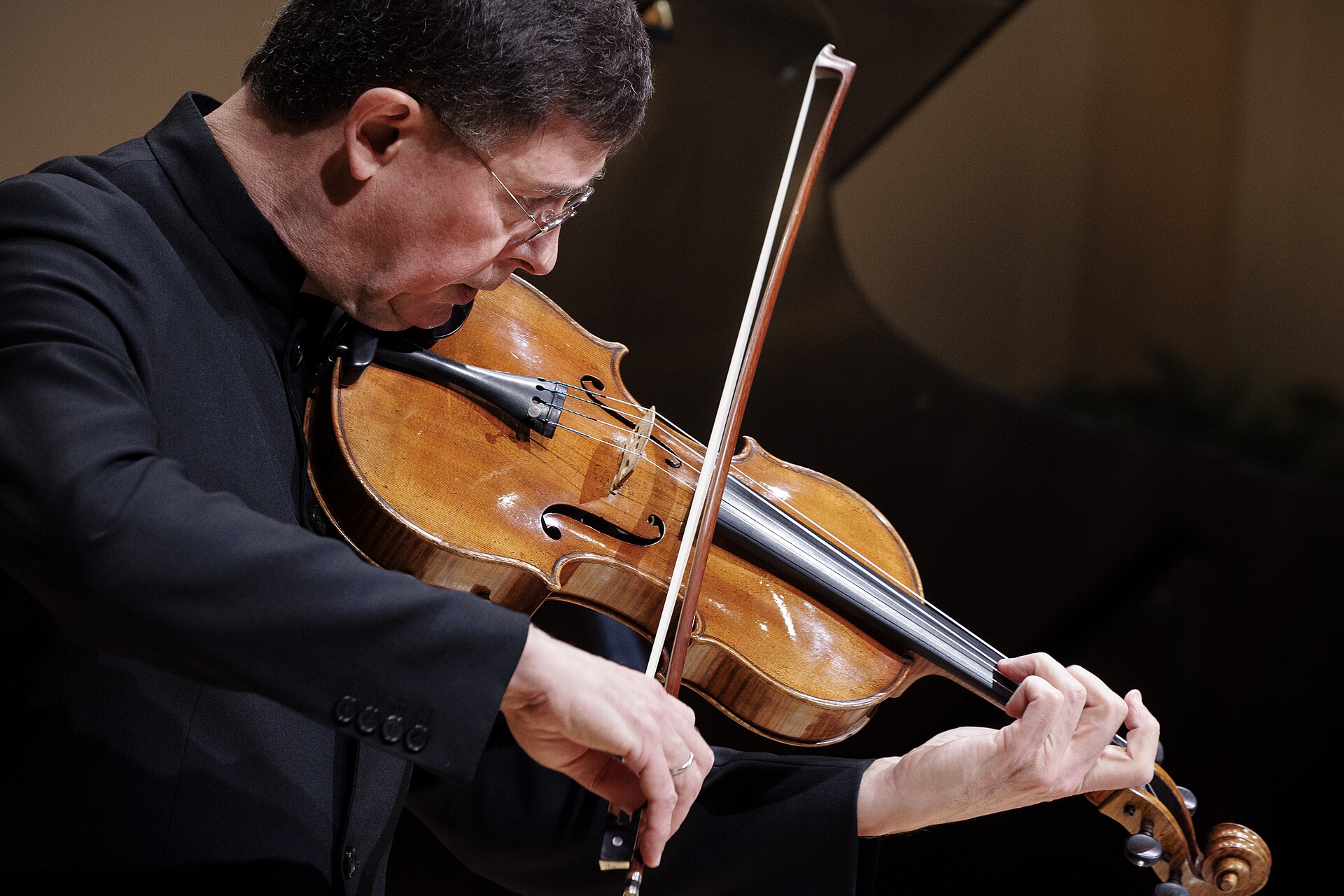
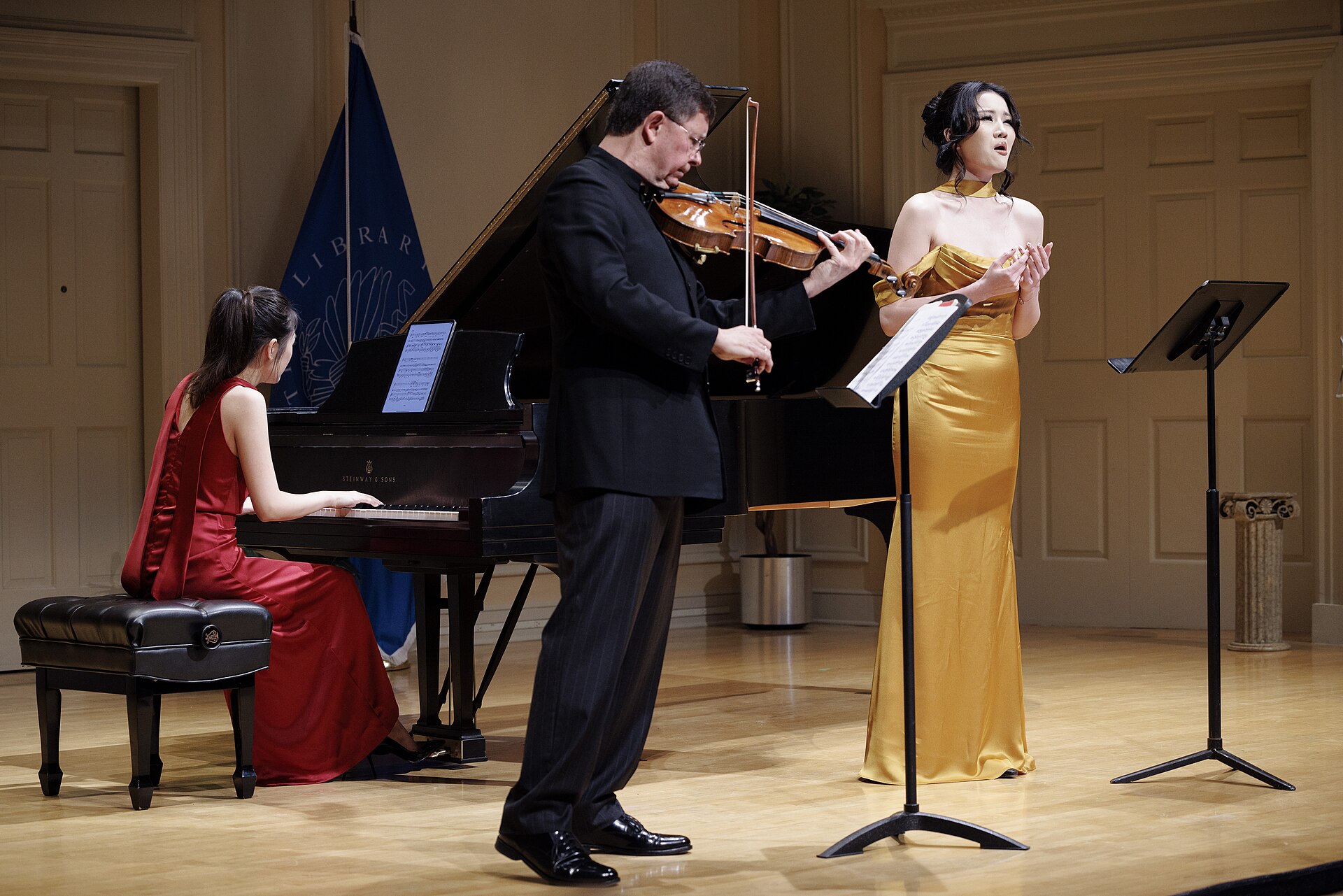
The Librarian of Congress, Carla Hayden, called it an extraordinary gift to the Library and to the nation. David Fulton, explaining the gift, said that his wife Amy's own existence reflected the safe haven the United States had given her mother's family after they fled the Holocaust in Austria, and he described the donation as a capstone for the couple's collection. On 14 May 2025 the Library marked the gift with a concert at which Roberto Diaz again played the instrument, this time as its owner rather than its guest, accompanied by the mezzo-soprano Judy Zhuo and the pianist Lynn Ye; photographs from that concert, taken by the Library's staff photographer Shawn Miller and released without copyright restriction, are the basis of the images in this record.
The viola's catalog name changed with its ownership. It is now recorded as the Fulton, ex-Baird, Tuscan-Medici, carrying the names of the family that let it go and the family that brought it home, ahead of the older Medici association it has carried since the seventeenth century.
Joining the collection
The gift brought the Library's Stradivari holdings to six instruments: the Whittall quartet of the 'Betts', 'Ward' and 'Castelbarco' violins and the 'Castelbarco' cello, the Whittall 'Cassavetti' viola of 1727, and now this second viola of 1690. Alongside them the Library holds the 'Kreisler' violin by Giuseppe Guarneri del Gesu, given by Fritz Kreisler in 1952, and the 'Brookings' violin by Nicolo Amati, given in 1938. All are kept in the Whittall Pavilion of the Thomas Jefferson Building and made available, under the collection's long-standing mandate, for research and public performance rather than sealed away as trophies.
Technical evidence
- Top wood and dendrochronology
- Fine-grained spruce. Dendrochronological analysis dates the outer growth ring of the top wood to 1683, seven years before the instrument was made, and finds a grain pattern consistent with other Stradivari instruments of the 1690s.2
- Back, ribs and scroll
- Two-piece back and matching ribs and scroll, all of quarter-cut maple.7
- Varnish
- Oil varnish, described in one source as orange to light brown and in another as yellow-golden; both descriptions are given here rather than resolved to one, since the sources consulted do not agree.76
- Arching
- High, barrel-shaped arching typical of Stradivari's work in the last decade of the seventeenth century: back arching rises to 19.5 mm, top arching to 18.7 mm.2
- Dimensions
- Length of back 41.4 cm; upper bouts 18.7 cm; middle bouts 13.1 cm; lower bouts 24.3 cm, sizing it as a contralto (alto-register) viola rather than the larger tenor form of its sibling instrument in Florence.6
- Filled holes in the lower ribs
- Six holes below the saddle, filled with beech pins, first recorded by the Rudolph Wurlitzer firm when the instrument reached the United States in the 1920s. The Library of Congress reads them as evidence either of a former five-or-more-string setup or of an unusual historic tailpiece attachment; neither explanation is confirmed.25
- Fingerboard and varnish shadow
- When a later fingerboard was removed, the varnish beneath showed darker where the original fingerboard had sat, a band 78 mm down from the upper edge matching the old fingerboard's width, with a 60 mm strip left unvarnished at the neck end, consistent with Stradivari's practice of varnishing the instrument with the fingerboard already in place.2
- Inscription
- Inside the top, treble upper bout, in pen: 'The Medici Stradivari / A.H. June 1913', written by Alfred Hill of W. E. Hill and Sons at the point the firm acquired the instrument.25
Provenance
- 1690 -Ferdinando de' Medici, Grand Prince of Tuscanydocumented
Made in Cremona by Antonio Stradivari as part of a set later called the Medici quintet (two violins, a cello, and eventually two violas), associated with the Cremonese nobleman Bartolomeo Ariberti and the Florentine court of Ferdinando de' Medici. An older cataloging tradition names the recipient as Ferdinando's father, Grand Duke Cosimo III; this record follows the more specific sourcing crediting Ferdinando.45
- 1690 - 18th centuryUnrecordedunknown
The Medici quintet was broken up at an unrecorded date. The tenor and contralto violas had gone their separate ways by the late eighteenth century, the tenor remaining in Florence and the contralto (this instrument) leaving Italy. No mechanism or date for the dispersal is given in the sources consulted.12
- 18th century - 1803The Gianfigliazzi family of Florence, then an unnamed Englishman resident in Florencedocumented
Per W. E. Hill and Sons' 1902 monograph, the viola arrived in England with the last descendant of the noble Gianfigliazzi family of Florence, and was sold in 1803 to an Englishman living there.25
- 19th century - 19th centuryBright and Jones, then Alexander Glennie, then F.F. de Rougemont, then Avery Tyrelldocumented
Reconstructed from the Betts notebook and preserved in the Cozio Archive: Bright and Jones to Alexander Glennie; Glennie's son-in-law F. F. de Rougemont; then to Avery Tyrell, who inherited it from his father Edward. No individual dates are given in the sources consulted.5
- 1913 - 1913W.E. Hill and Sonsdocumented
Acquired from the Tyrell heirs. Alfred Hill inscribed the top interior 'The Medici Stradivari / A.H. June 1913' and the firm assessed it as one of the finest of the ten existing Stradivari violas.25
- 1913 - 1924 or 1925Richard Bennett, then W.E. Hill and Sons again, then the Rudolph Wurlitzer Companydocumented
Sold to Richard Bennett in 1913 or 1914, later reacquired by the Hills, then sold through the Rudolph Wurlitzer Company of New York.5
- 1924 or 1925 - 1957Herbert N. Strausdocumented
The Library of Congress dates the sale to 1925; the Wurlitzer-Hill chain preserved by the Cozio Archive implies 1924. Straus, an amateur musician, was a son of Isidor and Ida Straus, co-owners of R. H. Macy and Company; Isidor Straus died aboard the Titanic in 1912.2513
- 1957 - 1960Cameron Bairddocumented
Bought from the Straus estate in 1957. W.E. Hill and Sons issued a written certificate of authenticity on 2 February 1957. Baird, a violist, founded and chaired the music department at the State University of New York at Buffalo; during his ownership the viola was loaned for performance to Boris Kroyt and Alexander Schneider of the Budapest String Quartet.45
- 1960 - 1977Jane Baird (Cameron Baird's widow)documented
Baird died in 1960; the instrument passed to his widow.45
- 1977 - 2025Jane Baird, then the Baird family through the Tuscan Corporationdocumented
Placed on continuous loan with the Library of Congress in 1977. Ownership remained private throughout; the instrument was displayed publicly, played annually in the Library's Stradivari Memorial Concert, and photographed as part of the Library's 2018 ten-instrument Stradivari display, all while still on loan rather than owned by the Library.89
- 2025-04-30 - presentLibrary of Congressdocumented
Given outright on 30 April 2025 by David and Amy Fulton (20 million dollars in cash) and the Baird family through the Tuscan Corporation (the remaining value, an in-kind contribution), against a total assessed value of 30 million dollars. The precise structuring and tax treatment of the gift are not stated in the sources consulted. The instrument's catalog name changed to Fulton, ex-Baird, Tuscan-Medici.34511
Related works
| Work | Relation | Where it is |
|---|---|---|
| Medici, Tuscan violin Antonio Stradivari | Sole surviving violin of the same original Medici commission of 1690 Documented in W. E. Hill and Sons' 1891 monograph on the instrument, published under the title crediting Cosimo de' Medici rather than his son Ferdinando. | Museo degli strumenti musicali, Accademia di Santa Cecilia, Rome |
| Medici tenor viola Antonio Stradivari | The sibling tenor viola of the same 1690 commission; separated from this contralto viola by the late eighteenth century Remained in Tuscany continuously since the original commission, unlike the contralto viola described in this record. | Galleria dell'Accademia, through the Conservatorio Luigi Cherubini, Florence |
| 'Cassavetti' viola Antonio Stradivari | The Library of Congress's other Stradivari viola, made in 1727 Part of Gertrude Clarke Whittall's outright gift of 1935, unlike the Tuscan-Medici viola's forty-eight years on loan before its 2025 gift. | Library of Congress, Washington DC |
| 'Betts' violin Antonio Stradivari | Part of the same Whittall Stradivari group at the Library of Congress Reported to be among the most photographed violins in the world; sold in 1820 for a single guinea before its value was recognized. | Library of Congress, Washington DC |
| 'Kreisler' violin Giuseppe Guarneri del Gesu | The Library's other headline stringed instrument, from a different Cremonese workshop Given by the violinist Fritz Kreisler in 1952; its twin, cut from the same piece of wood, is the 'Goldberg-Baron Vitta' violin, not currently on display. | Library of Congress, Washington DC |
Open questions
- How many Stradivari violas actually survive: sources consulted give both 'around ten' and 'around a dozen', and this record has not been able to reconcile the two figures.
- When and by whom was the original Medici quintet broken up, and when precisely did the tenor and contralto violas go their separate ways? No date is given in the sources consulted.
- What are the exact dates of the nineteenth-century English ownership chain (Bright and Jones, Alexander Glennie, F. F. de Rougemont, Avery Tyrell)? The sequence is documented but undated in the sources consulted.
- Did Herbert N. Straus buy the viola in 1924 or 1925? The Library of Congress's own account and the Wurlitzer-Hill chain preserved by the Cozio Archive disagree by a year.
- What became of the second violin and, if it survived independently, the cello from the original Medici quintet? Only this viola, its sibling tenor viola, and one violin ('Medici, Tuscan') are identified with confidence in the sources consulted.
- What appraisal methodology set the viola's value at 30 million dollars in 2025, and exactly how were the Fultons' cash gift and the Baird family's in-kind contribution structured and administered? Not stated in the sources consulted.
- Whether either the Fulton or Baird contribution to the 2025 gift claimed a U.S. charitable tax deduction, and on what appraised basis, is not addressed in the sources consulted.
Sources
- 1Library of Congress, catalog record, 'Viola by Antonio Stradivari, Cremona, 1690, Fulton, ex-Baird, Tuscan-Medici'.
https://www.loc.gov/item/ihas.200154817/ - 2Library of Congress, 'Viola by Antonio Stradivari, Cremona, 1690, Fulton, ex-Baird, Tuscan-Medici', essay, Violas and Violoncello, Stringed Instruments Collection, Musical Instruments at the Library of Congress.
https://www.loc.gov/item/ihas.200155597/ - 3Library of Congress Newsroom, 'Library of Congress Acquires 1690 Stradivari Tuscan-Medici Viola'.
https://newsroom.loc.gov/news/library-of-congress-acquires-1690-stradivari-tuscan-medici-viola/s/76654220-27e4-4377-bd1b-9d6605a14806 - 4Library of Congress Magazine, 'Extraordinary Stradivari', May-June 2025 issue.
https://lcm.loc.gov/issue/may-june-2025/extraordinary-stradivari/ - 5Tarisio, Cozio Carteggio, 'A gift to the nation: the 1690 Tuscan, Medici Stradivari viola has been donated to the Library of Congress'.
https://tarisio.com/cozio-archive/cozio-carteggio/a-gift-to-the-nation/ - 6Tarisio, Cozio Archive instrument record, Antonio Stradivari viola, 1690, 'Medici, Tuscan (Contralto)', property ID 40260.
https://tarisio.com/cozio-archive/property/?ID=40260 - 7The Strad, 'Record breaker: Library of Congress acquires Tuscan-Medici Stradivari viola for $30 million'.
https://www.thestrad.com/news/record-breaker-library-of-congress-acquires-tuscan-medici-stradivari-viola-for-30-million/19568.article - 8Library of Congress Information Bulletin, Yvonne French and Susan Manus, ''Masters at the Beginning of the Art': Stradivari Society Director Lectures at Library', February 1999, vol. 58 no. 2.
https://www.loc.gov/loc/lcib/9902/stradivari.html - 9Library of Congress blog 'In The Muse', Anne McLean, 'A Record-setting Display of Antonio Stradivari Instruments at the Library', 17 May 2018.
https://blogs.loc.gov/music/2018/05/a-record-setting-display-of-antonio-stradivari-instruments-at-the-library/ - 10Roll Call, Alex Gangitano, 'Inside the Library of Congress' Rare Instruments Collection', 12 October 2017.
https://rollcall.com/2017/10/12/inside-the-library-of-congress-rare-instruments-collection/ - 11Philanthropy News Digest, 'With gift, Library of Congress acquires $30 million Stradivarius viola'. Content accessed via search index; direct page fetch was blocked by the source server.
https://philanthropynewsdigest.org/news/with-gift-library-of-congress-acquires-30-million-stradivarius-viola - 12Wikipedia, 'Medici tenor viola'. Tertiary source, flagged for replacement with a museum or Cozio Archive citation for the Florence instrument.
https://en.wikipedia.org/wiki/Medici_tenor_viola - 13Wikipedia, 'Isidor Straus'. Tertiary source, used only for the Straus family and Titanic biographical detail; flagged for replacement with a primary Straus-family or Macy's company history source.
https://en.wikipedia.org/wiki/Isidor_Straus - 14Wikipedia-sourced biographical summary, 'Ferdinando de' Medici, Grand Prince of Tuscany', for his role as music patron and his 1688 hiring of Bartolomeo Cristofori. Tertiary source, flagged for replacement with a scholarly biography of Ferdinando de' Medici.
https://en.wikipedia.org/wiki/Ferdinando_de%27_Medici,_Grand_Prince_of_Tuscany - 15Wikimedia Commons, file information page for the two 14 May 2025 concert photographs, credited Shawn Miller/Library of Congress, licensed CC0.
https://commons.wikimedia.org/wiki/File:Roberto_D%C3%ADaz_performs_on_the_Library%27s_1690_%22Tuscan-Medici%22_viola_by_Antonio_Stradivari_during_a_concert_celebrating_the_viola%27s_acquisition_by_the_Library_of_Congress,_May_14,_2025_-_1.jpg - 16Wikimedia Commons, file information page for the Medici tenor viola photograph, credited to photographer Sailko, licensed CC BY-SA 4.0.
https://commons.wikimedia.org/wiki/File:Tenor_viola_of_the_%22Medici%22_Quintet_1690.jpg


Change log
2026-08-06 - Record created at the house standard: researched narrative, technical evidence, maker dossier, graded provenance chain, prices with hammer and premium separated, related works, open questions and sources.